2029 Vision: When Small-Town Businesses Build With the Same Source Code as Global Startups
· VegaDigi Journal
Here's a question worth sitting with: does where you're based still decide how good your software can be? For a long time, the honest answer was yes. Big-city startups had access to bigger dev teams, more capital, and faster iteration. Founders working out of smaller towns or with leaner budgets often started several steps behind - not because their ideas were weaker, but because building the underlying technology from scratch takes time, money, and specialized skill that isn't evenly distributed.
A reasonable vision for 2029
Imagine a near future where the starting point for a new app, website, or SaaS product isn't tied to your location or team size at all. Ready-made source code marketplaces are already moving in this direction - offering developers, freelancers, and founders a foundation to build from, regardless of where they're sitting when they open their laptop. The idea isn't that ready source code replaces skill or effort. It's that it removes one of the biggest barriers to entry: having to build every foundational piece - logins, dashboards, admin panels - before you even get to your actual idea.
Why geography has mattered so much until now
Historically, access to strong developer talent has clustered around major tech hubs. That's not a controversial statement - it's just how hiring networks and investment tend to concentrate. A founder without access to that network either had to learn to build everything themselves, hire remotely at a premium, or wait far longer to get a working product in front of users.
What changes when the foundation is already there
When a founder can start with existing, customizable source code - a script, a template, an app foundation - the remaining work shifts toward what actually matters: adapting it to their market, their brand, their customers. That's a meaningfully different starting point than staring at a blank screen. It doesn't mean zero work. It means the work that's left is often the part only that founder can do anyway - understanding their own audience and shaping the product around it.
What this could mean for smaller markets
Think about tier-2 and tier-3 cities, or founders in regions without a dense startup ecosystem. If the starting technology is accessible to anyone with an internet connection and a marketplace account, the competitive gap narrows. It doesn't disappear - execution, marketing, and customer understanding still matter enormously - but the technical head start becomes something more people can access, not just those near a tech hub.
Where platforms like VegaDigi fit in
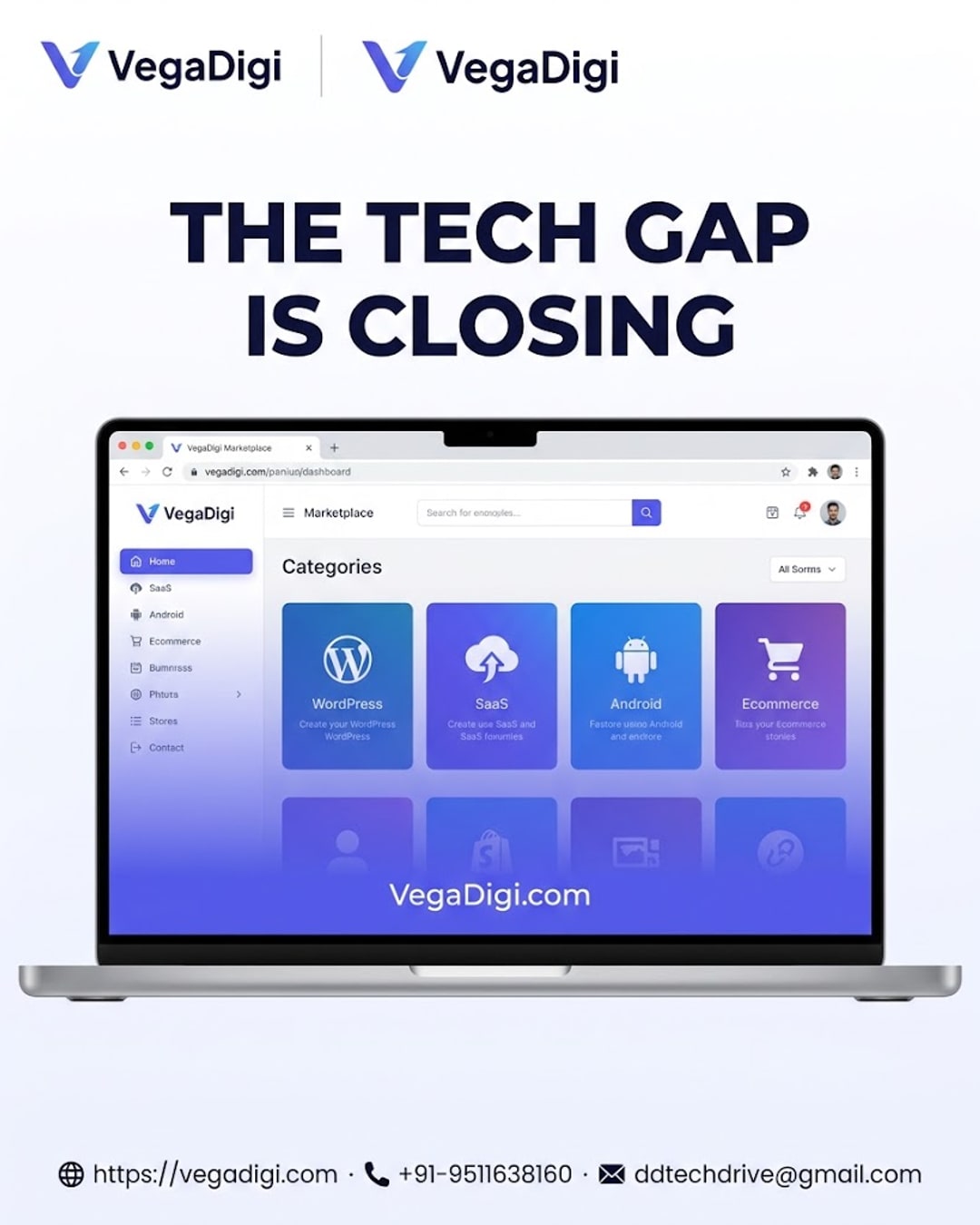
This is part of why marketplaces built around ready-made source code - covering categories like WordPress, PHP scripts, SaaS scripts, Android app source code, and e-commerce solutions - matter beyond convenience. They represent a shift in who gets to start building. On VegaDigi, the same product categories available to an agency in a major city are available to a solo founder anywhere else, ready to be discovered, customized, set up, and launched.
My take: if you're a founder outside a major tech hub wondering whether you can compete on the technology side, the honest answer is: increasingly, yes - as long as you're willing to do the customization and setup work, not expect a finished business to fall out of a download. Start by browsing categories close to your actual idea, not the flashiest product you see first. The foundation matters less than what you build on top of it.