AI agents are booming, but every AI tool still needs a real app around it — VegaDigi's ready-made source code gives automation projects a working foundation to plug into
· VegaDigi Journal
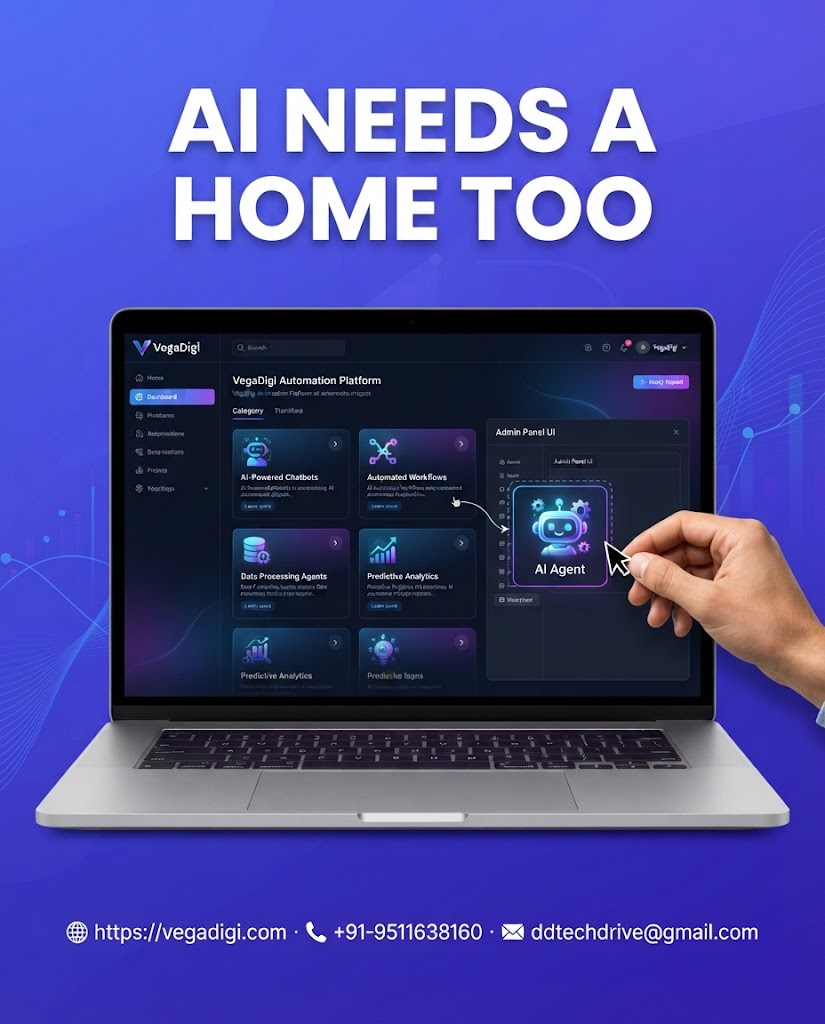
Every week there's a new AI agent tool, a new automation framework, a new chatbot demo going viral. It's an exciting time to be building. But here's something a lot of founders and developers realize a few weeks into a project: an AI model, no matter how capable, is not a product by itself. It still needs an application wrapped around it.
What an AI Agent Actually Needs Around It
Strip away the hype and every AI-powered tool needs the same unglamorous foundation — user authentication, role-based access control, a dashboard to view outputs, an admin panel to manage settings, and some kind of billing or usage tracking if it's a SaaS product. None of that is AI work. It's plumbing. And plumbing takes real time to build correctly.
Why Rebuilding the Shell Slows Teams Down
The irony is that many teams move fast on the AI integration itself — APIs are well documented, models are easy to call — and then lose weeks building the login screen, the dashboard layout, the admin panel. It's the least exciting part of the build, and also one of the most repetitive across projects.
Starting From a Ready Foundation Instead
This is where ready-made source code changes the equation. Instead of designing and coding an application shell from zero, you start with an existing SaaS, dashboard, or automation-ready foundation, then customize it to fit your specific AI product. You're not skipping development — you're skipping the part of development that looks the same on every project anyway.
What VegaDigi Offers for This
VegaDigi's AI & Automation and SaaS Scripts categories are built around exactly this idea — foundations with the dashboard, auth, and admin structure already in place, ready for you to customize, connect your AI logic to, set up, and launch. It won't build your AI model for you, and it's not a finished business out of the box, but it removes the part of the build that rarely differentiates one AI product from another.
What This Means for Builders in 2026
As more developers, freelancers, and startup founders jump into the AI agent space, the ones who move fastest won't necessarily be the ones with the best model — they'll be the ones who spend their time on the AI itself instead of rebuilding the same login page for the fifth time this year.
My take: if you're prototyping an AI agent idea and want to validate it quickly, start from a ready SaaS or automation foundation and spend your energy on the integration — that's where the real value of your product lives. If you're already deep into a custom build with very specific architecture needs, building fully from scratch still makes sense. But for most teams testing a new AI concept, starting with ready source code and customizing it is the faster, more sensible path.