Behind the Scenes: How VegaDigi Reviews Every Source Code Listing Before It Goes Live
· VegaDigi Journal
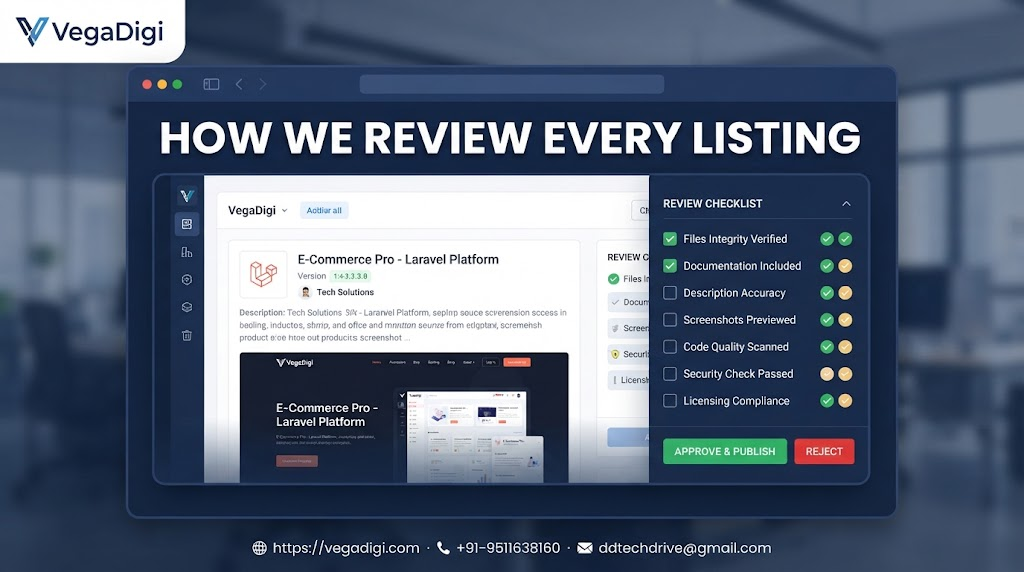
If you have ever browsed a source code marketplace, you have probably wondered what happens before a script or theme actually appears for sale. Is it just uploaded and published instantly, or does someone actually look at it first? Here is a straightforward look at how listings move through VegaDigi before they reach the public catalog.
Why a review step matters at all
A marketplace full of source code, templates and scripts is only useful if buyers can trust that what they see is what they get. That means before a listing is visible, it needs to be checked for a few basics: does the description match what is actually included, are the screenshots real representations of the product, and are the files organized the way they are described. This is not about grading code quality line by line — it is about making sure the listing itself is accurate and usable.
What gets checked before publishing
A typical review pass on a submitted listing looks at the product title and category, the written description for clarity and accuracy, the screenshots or preview images, and whether the files match what is promised. Listings that are incomplete or unclear get sent back before they are published, not after a buyer has already downloaded them.
Why this matters for developers and founders browsing the marketplace
If you are a freelancer, agency or startup founder looking for a source code foundation for your next project, this review step is part of why browsing a marketplace like VegaDigi can be more efficient than sifting through random code repositories with no listing standards at all. You are not guaranteed a perfect fit for your project, but you are looking at listings that went through a basic accuracy check first.
What this does not mean
A reviewed listing is not the same as a fully tested, production-ready application for your exact use case. You still need to read the actual product details, check what is included, and evaluate whether it fits your project before buying. The review process is about listing accuracy, not a guarantee of business outcomes.
My take
If you are new to browsing source code marketplaces, this kind of listing-level review is a reasonable baseline to look for — it will not replace your own due diligence, but it does mean someone looked at the listing before it went live. Read the actual product description carefully, look at the real screenshots, and ask questions before you buy. That combination — a reviewed listing plus your own check — is a smarter way to start than picking blind.