Behind the Scenes: Meet the Developers Who Build VegaDigi's Source Code
· VegaDigi Journal
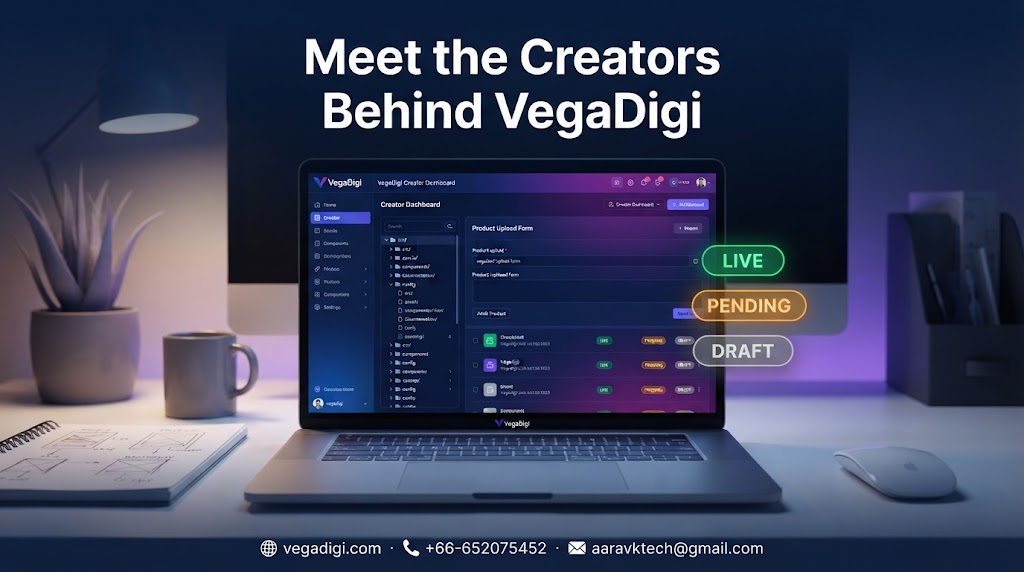
If you've ever browsed a marketplace full of scripts, themes and app templates, you've probably wondered who's really behind all of it. Is it one big team churning out generic code, or is there something more interesting going on? Here's a look at the creator side of VegaDigi, and why it matters for anyone thinking about buying ready-made source code for their next project.
The Creator Side of the Marketplace
VegaDigi isn't a single factory producing identical products. It's built around independent developers and small teams who create source code for specific categories — WordPress themes, PHP scripts, Android app foundations, SaaS starters, ecommerce systems and more. Each creator typically focuses on what they know best, which is part of why the marketplace covers such a wide range of product types instead of one narrow niche.
From Project to Listing
A piece of source code doesn't just appear on VegaDigi the moment someone finishes coding it. It has to be packaged, organized and prepared in a way that makes sense to someone who wasn't there while it was built. That means folder structures, basic documentation, and enough context for a buyer to understand what they're getting before they customize and set it up for their own use.
Why This Matters When You're Buying
Knowing there's a real developer or team behind a listing changes how you think about buying source code. You're not pulling random files off a forum thread with zero context — you're getting a project that someone intentionally built and prepared to be reused as a foundation. That doesn't mean every product fits every use case perfectly, but it does mean there's a starting point with some thought already put into it.
What This Means for Developers Considering VegaDigi
If you're a developer sitting on a script, template or app you built for a past project, the marketplace model is worth understanding from the other side too. The same structure that makes buying source code easier — clear categories, organized files, a straightforward marketplace — is the same structure that makes it possible for creators to put their work in front of people actually looking for it.
My Take
If you've been hesitant about buying source code because it feels like a black box, this is worth internalizing: there's usually a real developer's project history behind that listing, not a random code dump. That doesn't replace due diligence on your end — always check the demo, the docs, and whether it fits your stack — but it does mean you're starting from something someone actually built with intent, rather than starting from nothing. For developers and small agencies especially, that's a meaningfully different starting point than an empty project folder.