Calculate Your Real ROI: A Simple Formula to See What Ready-Made Source Code Saves You in Hours and Money
· VegaDigi Journal
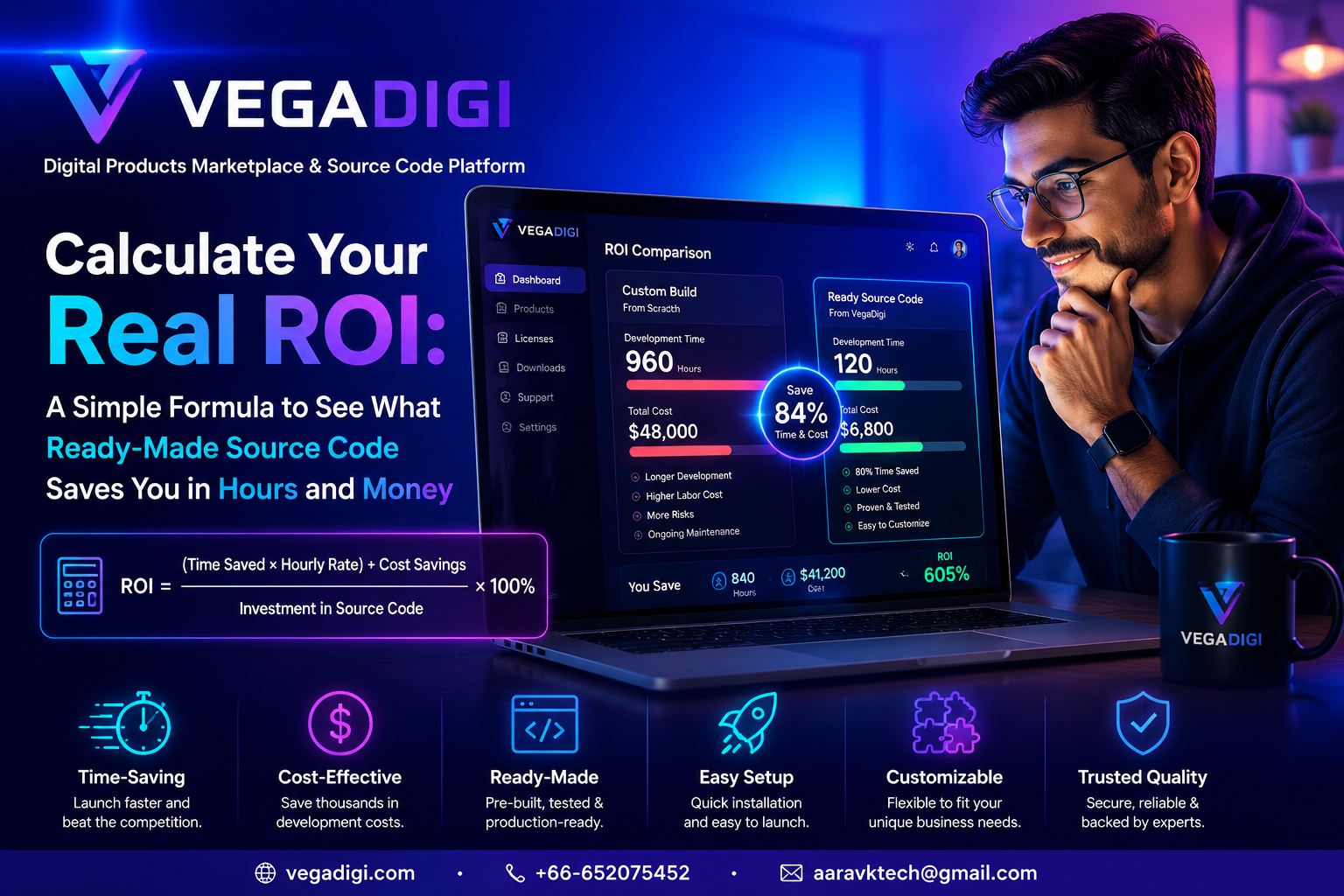
Every founder eventually asks the same question: should I hire developers to build this from scratch, or start from something that already exists? The honest answer is - it depends, but you can't decide well until you actually compare the two paths. Here's a simple framework to help you calculate your own ROI before committing time or money to either route.
Why Most Founders Skip This Step
Most people jump straight into 'let's hire a developer' or 'let's find a template' without laying the two options side by side. The result is often a build that drags on far longer than expected, with costs quietly stacking up at every stage - planning, design, backend logic, testing, fixing bugs. None of that is visible until you're already deep into it.
What a Custom Build Actually Costs
A custom build isn't just the final product - it's every hour spent before you reach it. Requirements gathering, UI design, backend architecture, integrations, QA, and revisions all add up. None of these numbers are fixed, and they vary hugely by project, which is exactly why they're so easy to underestimate at the start.
What Buying Ready Source Code Actually Costs
With a ready-made source code purchase, you're paying a known, one-time amount for a working foundation. You still need to customize it, set it up, and configure it for your specific use case - that part isn't free, and no product should promise otherwise. But the starting cost is visible and fixed, which makes it far easier to plan around.
A Simple Way to Compare the Two
Write down what a custom build would realistically cost you in time and money for your specific project. Then write down the cost of a comparable ready-made source code option, plus a realistic estimate of the customization and setup work still needed. Whichever number is lower - and whichever timeline fits your launch window - is your starting point. It's not a universal rule; it's a decision you make project by project.
When Buying Ready-Made Makes Sense
If your project needs common building blocks - user accounts, admin panels, booking systems, e-commerce carts - there's a good chance a ready-made foundation already covers that groundwork, letting you spend your energy on what makes your product different instead of rebuilding the basics.
When Custom Building Still Makes Sense
If your product's core value depends on something highly specific that no existing script covers, custom development may genuinely be the better path. This framework isn't about avoiding development - it's about avoiding unnecessary development.
My Take
If you're early-stage and cash-conscious, run this comparison before you write a single requirements document - it takes twenty minutes and can save you weeks. If most of what you need is a solid, common foundation (bookings, dashboards, storefronts), start by browsing ready-made options on a marketplace like VegaDigi before you talk to a developer. If your idea genuinely needs something no existing script offers, that's when custom development earns its cost. Either way, do the comparison first - don't default to building from zero just because that's the familiar path.