CI/CD Ready: How VegaDigi Source Code Drops Straight Into Your Existing Deployment Pipeline
· VegaDigi Journal
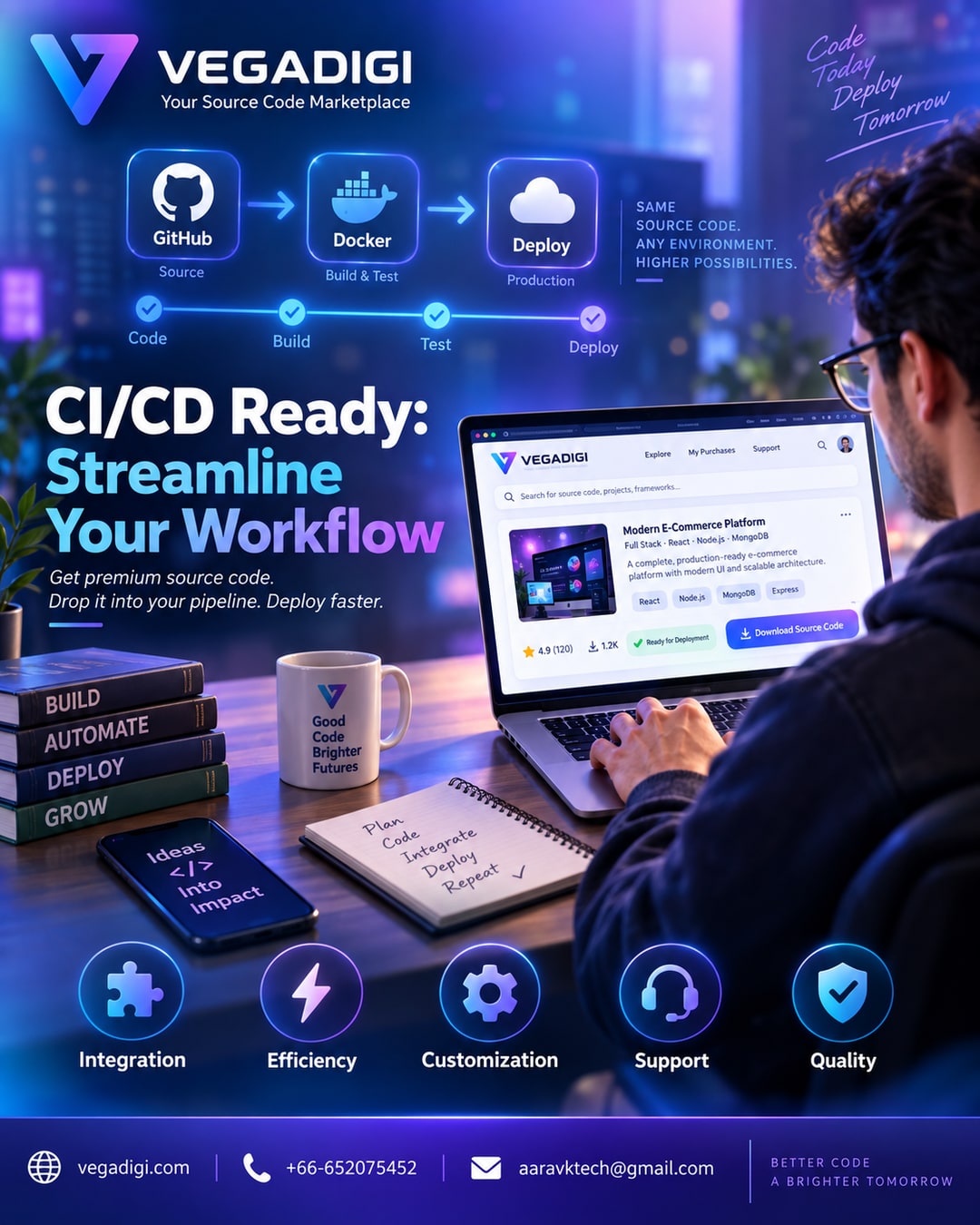
If you've ever brought third-party or purchased source code into a project, you know the real cost isn't reading the code, it's fitting it into how your team already ships software. This post looks at why source code that respects your existing CI/CD and deployment workflow matters more than most buyers realize, and what to check before you bring any ready-made source code into your stack.
The hidden cost of pipeline mismatch
Many teams don't lose time writing new code. They lose time reworking build scripts, adjusting folder structures, or rewriting deployment configs just to make an external codebase fit their existing Git and CI/CD setup. When source code isn't structured with standard repository conventions in mind, even a strong product can create days of avoidable friction before a single feature gets customized.
What integration-friendly source code actually looks like
Source code that's easy to bring into an existing workflow generally follows familiar folder structures, keeps environment configuration separate from core logic, and doesn't assume a specific proprietary hosting setup. That's the standard VegaDigi listings are organized around, so a project can move into your Git repository and existing build process without demanding a parallel workflow just for that one purchase.
Fitting into the pipeline you already trust
Most development teams already have a deployment rhythm: commits flow into a repository, automated checks run, builds get created, and releases go out through a process everyone understands. Ready-made source code that respects this rhythm means your team can treat a new VegaDigi-based project the same way it treats any other repository, rather than carving out special handling.
What to check before you buy
Before bringing any ready-made source code into your workflow, it's worth checking how the project is structured, whether configuration is separated from core code, and whether the documentation gives you enough to connect it into your own repository and build process. VegaDigi source code listings are organized with this kind of practical integration in mind, since a product is only as useful as how easily it fits into the way your team actually works.
My take: if your team already has a CI/CD pipeline it trusts, don't settle for source code that forces you to build a second workflow around it. Look for listings with clear structure and documentation, bring the code into your existing repository first, then customize. That order saves far more time than customizing before you've confirmed it even fits your pipeline.