deploying high-performance medical practice management and telehealth booking scripts for independent healthcare clinics
· VegaDigi Journal
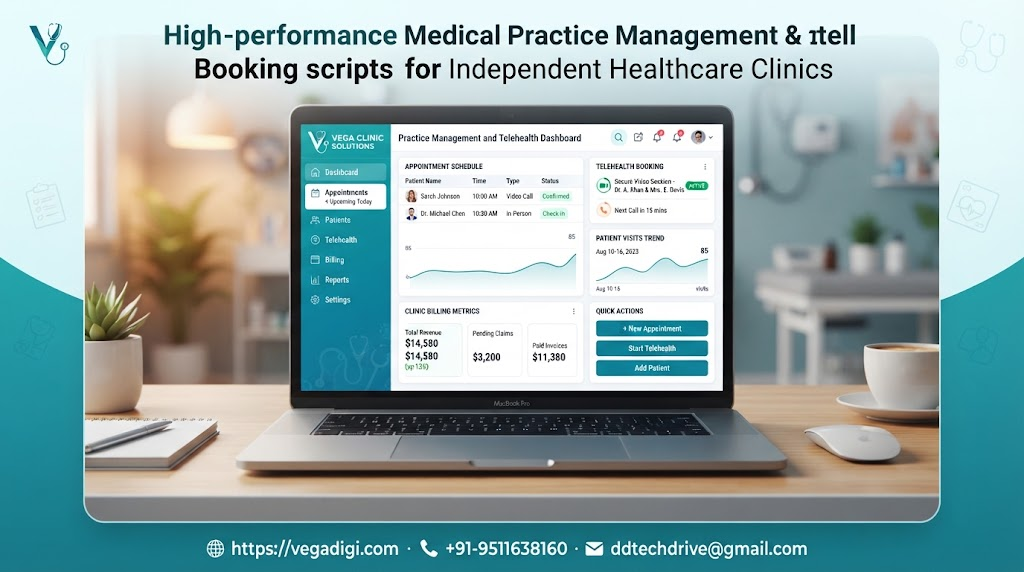
The digital transformation of independent medical practices has created a massive demand for streamlined, reliable software solutions. From small family clinics to specialized physical therapy offices, medical professionals need efficient tools to manage patient schedules, maintain electronic health records, and conduct secure virtual appointments. For software developers and tech entrepreneurs, building these solutions represents a lucrative market. However, developing a secure, HIPAA-compliant or privacy-focused practice management system from the ground up requires hundreds of hours of complex backend engineering, UI design, and compliance testing.
The Hidden Cost of Custom Medical App Development
When teams decide to code a clinic management portal from scratch, they often underestimate the sheer volume of boilerplate work required. You need to build robust role-based access control for doctors, nurses, receptionists, and patients. You need an airtight calendar sync engine that handles time zones, overlapping appointments, and cancellation policies. Furthermore, integrating reliable video streaming infrastructure for telehealth adds another layer of architectural complexity. By the time the core scheduling and video modules are built, months have passed and budget allocation is running thin.
Leveraging Production-Ready Healthcare Scripts
Instead of reinventing the wheel, many forward-thinking digital agencies and startup founders now rely on pre-built medical practice management scripts. These foundational codebases provide the essential architecture—such as patient databases, appointment booking workflows, prescription management modules, and billing dashboards—already fully written and tested. Developers can take these core assets, customize the user interface to match client branding, integrate specific local payment gateways, and deploy a fully functional clinic portal in a fraction of the usual timeframe. This approach allows development teams to focus their energy on high-value custom features rather than repetitive database schemas and calendar logic.
Key Modules to Look For in Clinic Management Software
When evaluating ready-made software for healthcare projects, certain core modules are non-negotiable. First, the appointment scheduling engine must support multi-doctor calendars and automated SMS or email reminders to minimize patient no-shows. Second, patient profile management should offer organized views for medical history, past prescriptions, and visit notes. Finally, integrated telehealth capabilities—whether powered by WebRTC or third-party video APIs—are essential for modern hybrid clinics. Ensuring these components are modular and clean-coded makes future maintenance significantly easier for your engineering team.
My Take on Accelerating Healthtech Projects
If you are an agency developer or solo founder looking to enter the digital health space, my advice is straightforward: do not waste your initial capital writing basic booking forms and user authentication pipelines from scratch. Grab a robust, well-documented practice management script as your foundation, strip out what you do not need, and channel your development hours into building unique value-add features that set your product apart in the market. It is the smartest way to balance speed, security, and budget constraints.
Ready to explore production-ready software assets for your next project? Browse professional scripts and development resources today at VegaDigi.com.