How VegaDigi Source Code Slots Into the Payment & Accounting Tools You Already Use
· VegaDigi Journal
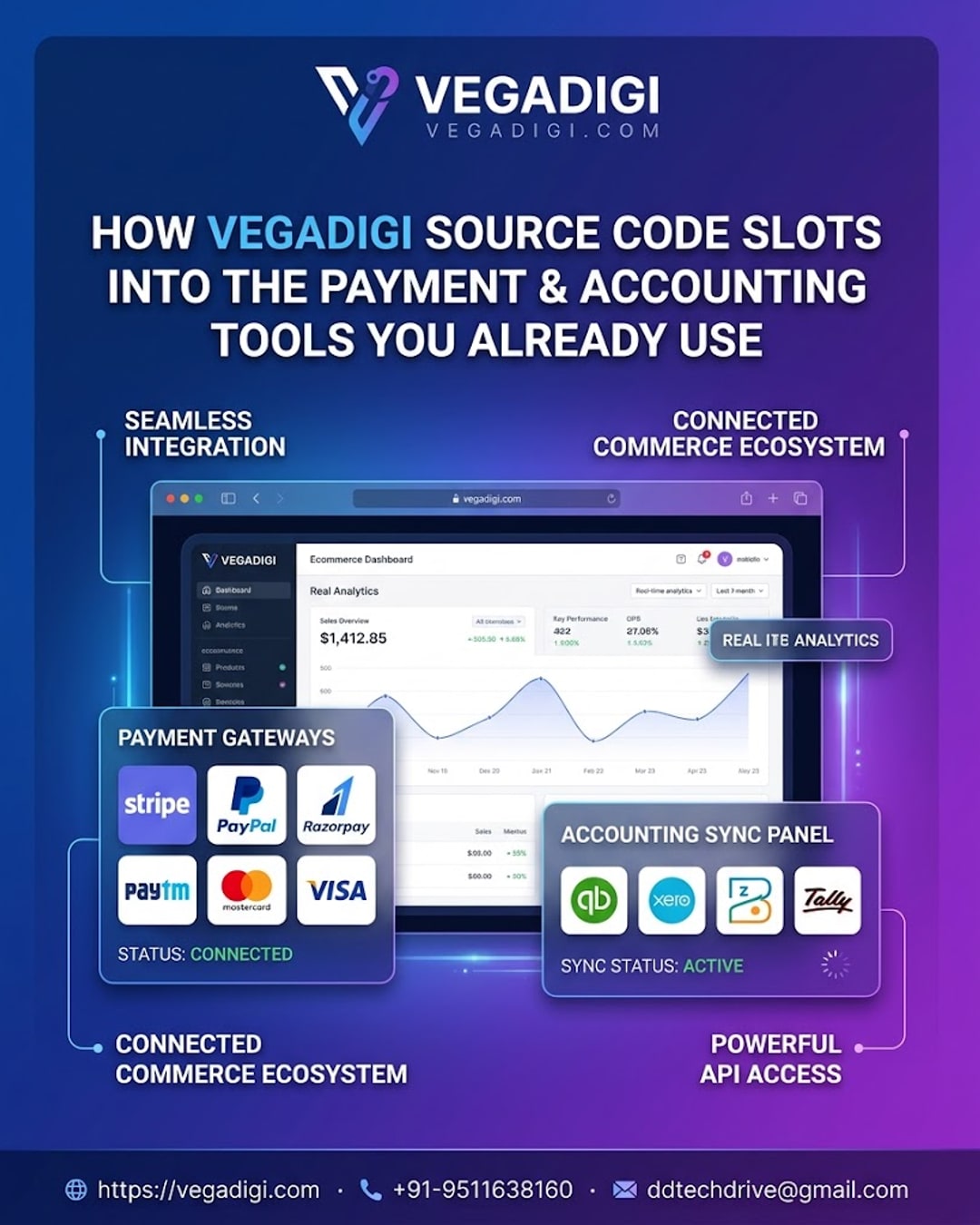
If you're running a business today, chances are you already have a payment gateway like Razorpay or Stripe collecting money, and some accounting tool like Tally or Zoho keeping the books straight. So when it's time to build a new website, app, or online store, one of the biggest hidden headaches isn't the design or even the coding — it's making everything talk to the systems you already depend on.
This is where starting with ready-made source code changes the equation. Instead of custom-building a checkout flow and payment logic from a blank file, you start with a foundation that's already built around common payment and business patterns, then customize the pieces to match your specific gateway, currency, and accounting setup.
Why Workflow Fit Matters More Than People Think
A lot of project delays don't come from the core feature build — they come from integration work. Getting a payment gateway wired up correctly, testing refund flows, and making sure your accounting exports line up with your existing bookkeeping process can eat weeks of a build. When your starting point already understands these patterns, that setup work becomes configuration instead of invention.
Ecommerce, SaaS, and Business Software Are the Categories Where This Matters Most
If you're launching an online store, a subscription SaaS product, or a business management tool, payments and accounting are not an afterthought — they're core to the product. VegaDigi's ecommerce scripts, SaaS scripts, and business management software listings are built with these workflows in mind, so your customization work focuses on your branding, your pricing logic, and your specific business rules.
What This Doesn't Mean
It's worth being clear here: source code isn't a magic connector that instantly plugs into every tool with zero setup. You'll still need to configure your gateway credentials, test transactions, and adapt the accounting export format to your specific software. What ready-made source code does is remove the need to build that entire integration layer from a blank screen — you're adapting a working foundation, not inventing one.
A Practical Way to Evaluate Any Source Code Purchase
Before you buy any script or app foundation, it's worth asking a simple question: does this already have hooks or structure for the kind of payment and business logic I need? If you're running an ecommerce store, check whether the product handles typical checkout and payment flows. If you're building a SaaS, check how subscription and billing logic is structured. This single question saves a lot of post-purchase surprises.
My Take
If you're a small business owner just trying to get an online store or booking system live quickly, look for ecommerce or business management source code that's built around common gateway patterns — you'll spend far less time on integration and more on making it look and feel like your brand. If you're a technical founder building something more custom, like a SaaS product with specific billing logic, use the ready source code as your scaffolding and expect to spend real, focused time adapting the payment and accounting layer to your exact rules. Either way, starting from an existing foundation on VegaDigi beats staring at an empty project file — you're customizing something real, not inventing it from nothing.