Myth debunked: customizing ready-made source code takes just as long as building from scratch
· VegaDigi Journal
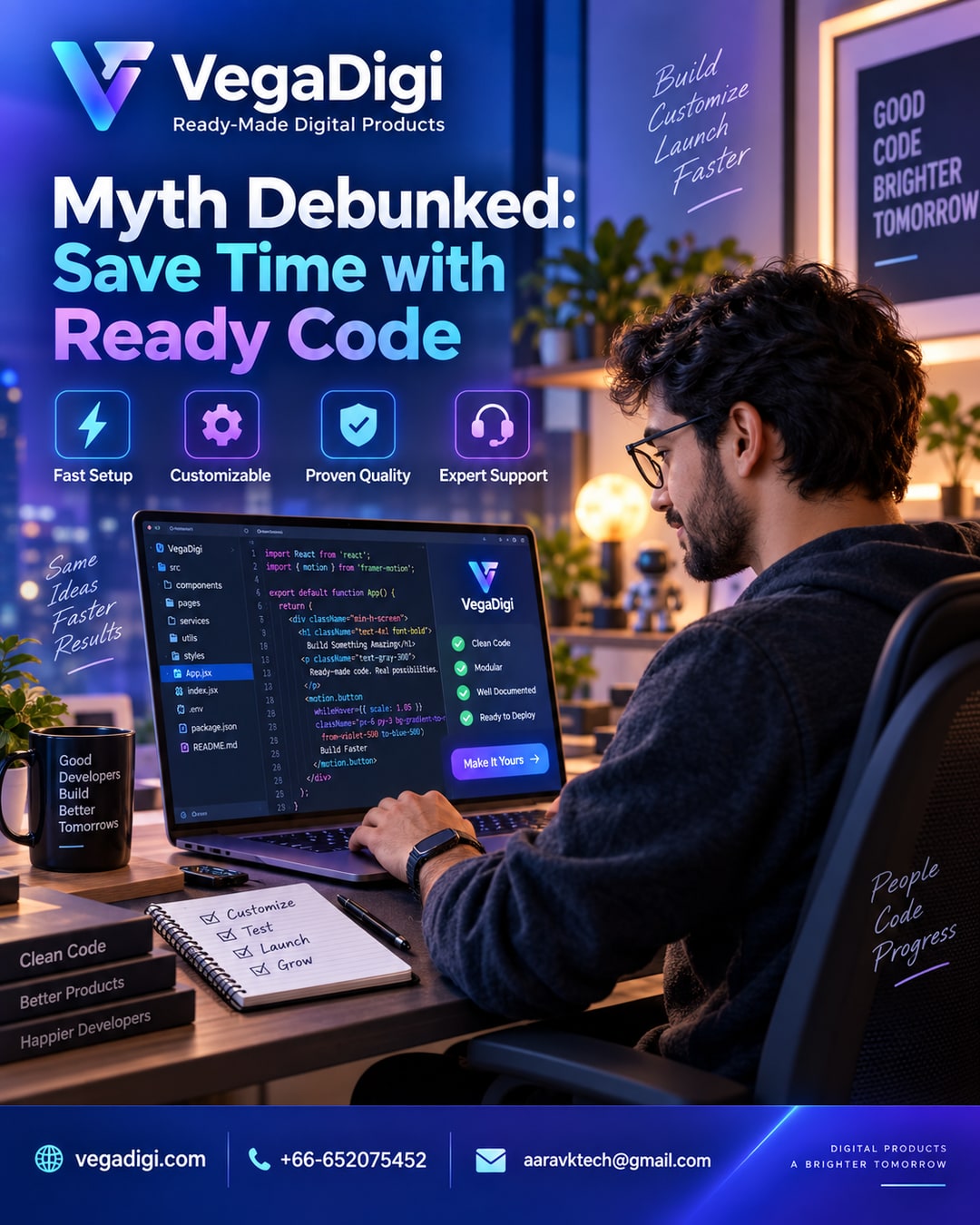
If you have ever browsed a source code marketplace, you have probably heard someone say: "Buying ready-made code doesn't actually save time — you still have to read through someone else's codebase, understand it, and adjust it, so it's basically the same as writing it yourself." It sounds reasonable on the surface. But it misses what actually changes when you start from an existing foundation instead of a blank project.
What building from zero actually involves
When you start a project from scratch, every layer has to be designed and built before you can even think about your unique features. Authentication, database structure, admin panels, base UI components, routing — all of it has to be planned, coded, and tested from the ground up. None of this is your product's actual value yet. It is groundwork.
What customization actually involves
With ready-made source code, that foundational layer already exists and has typically been tested before listing. Your development time shifts toward adapting branding, adjusting workflows, integrating your specific requirements, and configuring settings — not designing and coding the basic architecture from nothing. That is a different kind of work, not simply a smaller version of the same work.
Why the myth persists
Part of the confusion comes from the word customize sounding vague, as if it means unlimited, open-ended effort. In reality, customization has a scope — you are working within an existing structure, not starting with an empty file. Some products will need more adjustment than others depending on how closely they match your requirements, but the underlying framework doesn't need to be reinvented.
What this means for developers, startups and agencies
For a freelance developer juggling client projects, or a startup founder trying to test an idea, the practical difference is real: less time spent on foundational plumbing means more time spent on the parts of the project that are actually specific to your business or your client's needs. For agencies handling multiple projects at once, starting from a working base across several client builds can reduce repeated foundational work project after project.
What ready-made source code does not eliminate
To be clear — this is not a claim that ready-made code requires zero development effort or turns into a finished business automatically. Depending on the product, you will still need to review the code, test it, adapt it to your requirements, and set it up properly before launch. The claim here is narrower and more honest: the type of work changes, and a lot of the foundational heavy lifting is already done.
My take
If you are weighing whether to build from scratch or start with an existing codebase, ask yourself what your project genuinely needs to be unique. If most of what you need is a solid, common foundation — user accounts, an admin panel, a standard workflow — starting from ready-made source code and customizing it is usually the more efficient path. If your project depends on a completely novel architecture that nothing on the market resembles, building from scratch may still be the right call. For most developers, startups, and agencies working on typical web apps, SaaS tools, or e-commerce builds, browsing a marketplace like VegaDigi before writing a single line of foundational code is worth the ten minutes it takes.