Myth debunked: ready-made source code cannot integrate with third-party APIs or tools
· VegaDigi Journal
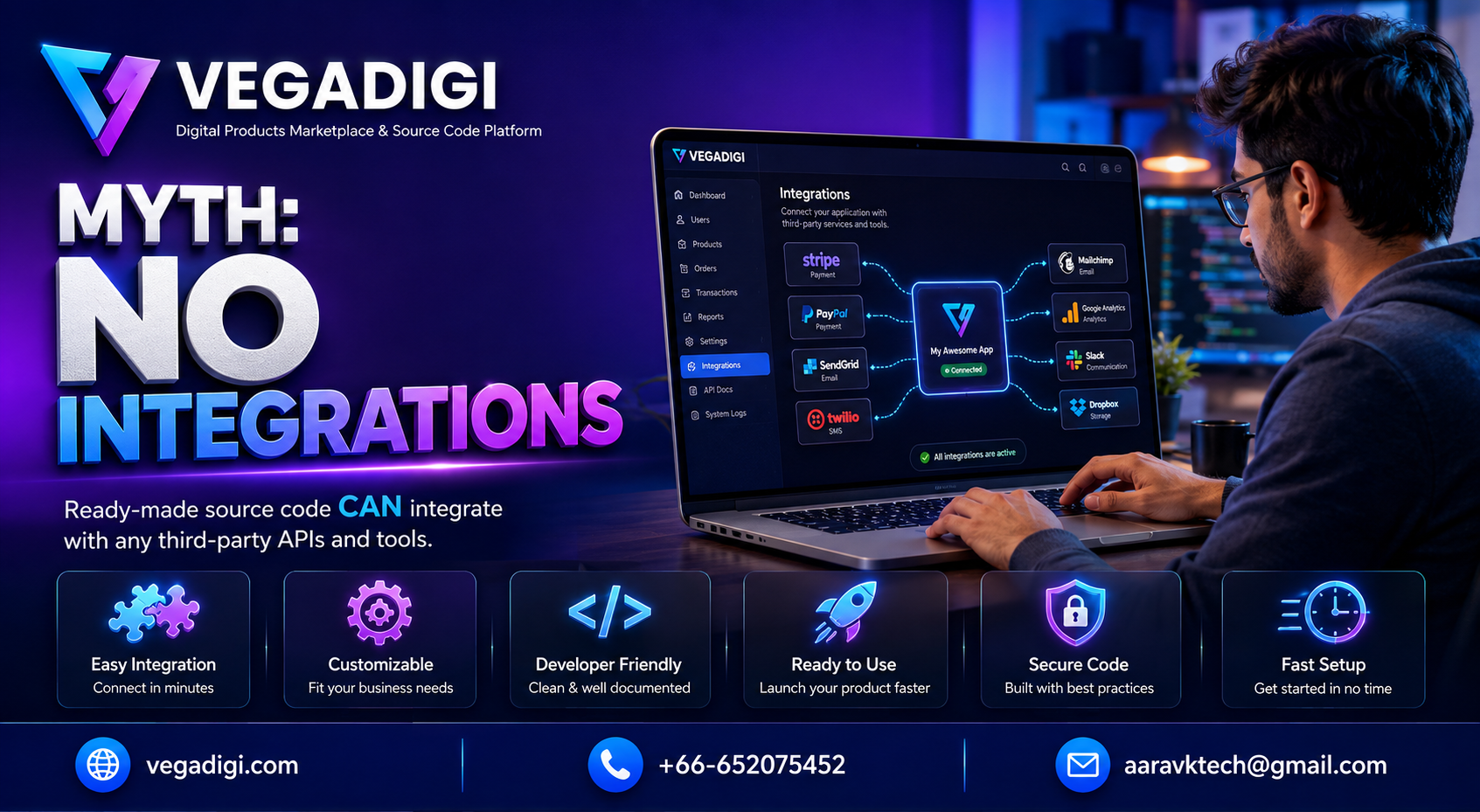
If you've ever browsed a source code marketplace and hesitated because you assumed the product would be a closed box, you're not alone. It's one of the most common objections developers, agencies, and founders raise before buying ready-made source code - and it's largely based on a misunderstanding of what source code actually is.
Where the myth comes from
The confusion usually comes from comparing source code marketplaces to no-code or drag-and-drop platforms, where integrations are limited to whatever the platform's builders decided to support. Ready-made source code is a different category entirely. When you buy a script, app, or web application on a platform like VegaDigi, you're getting the actual codebase - not a locked interface sitting on top of someone else's server.
Why source code is inherently extendable
Because you receive the real files - built on standard, recognizable frameworks - your development team (or you, if you're technical) can open the code and see exactly where a payment gateway, CRM, SMS service, or analytics tool would plug in. Integration isn't blocked by the product; it's simply part of the customization and setup phase that comes after purchase, same as it would be on any custom-built project.
What this means for buy-vs-build decisions
For startups and agencies weighing whether to hire a development team from scratch or start with ready-made source code, this matters. A custom build doesn't guarantee smoother integrations - it just means someone writes those same connection points from zero. Starting from ready source code means those foundational pieces (admin panel, database structure, core logic) already exist, and your integration work happens on top of a working structure instead of an empty one.
What to actually check before you buy
That said, not every product is built the same way, and VegaDigi doesn't claim every listing supports every integration out of the box - that depends on the specific product. Before purchasing, it's worth reviewing the product's live demo and any listed technical details, and where needed, asking a developer to review the codebase structure for how easily it can accommodate the tools you plan to connect.
My take: if you're evaluating ready-made source code and integrations are a top priority, don't rule out the category because of this myth - rule out specific products based on their actual code, not assumptions about the category as a whole. Spend ten minutes with the live demo, skim the structure if you can, and you'll usually find far more flexibility than you expected. For most standard integrations - payments, email, basic analytics - ready-made source code on a platform like VegaDigi is a legitimate starting point, not a dead end.