Myth Debunked: Ready-Made Source Code Is Only for Small Hobby Projects, Not Scalable Businesses
· VegaDigi Journal
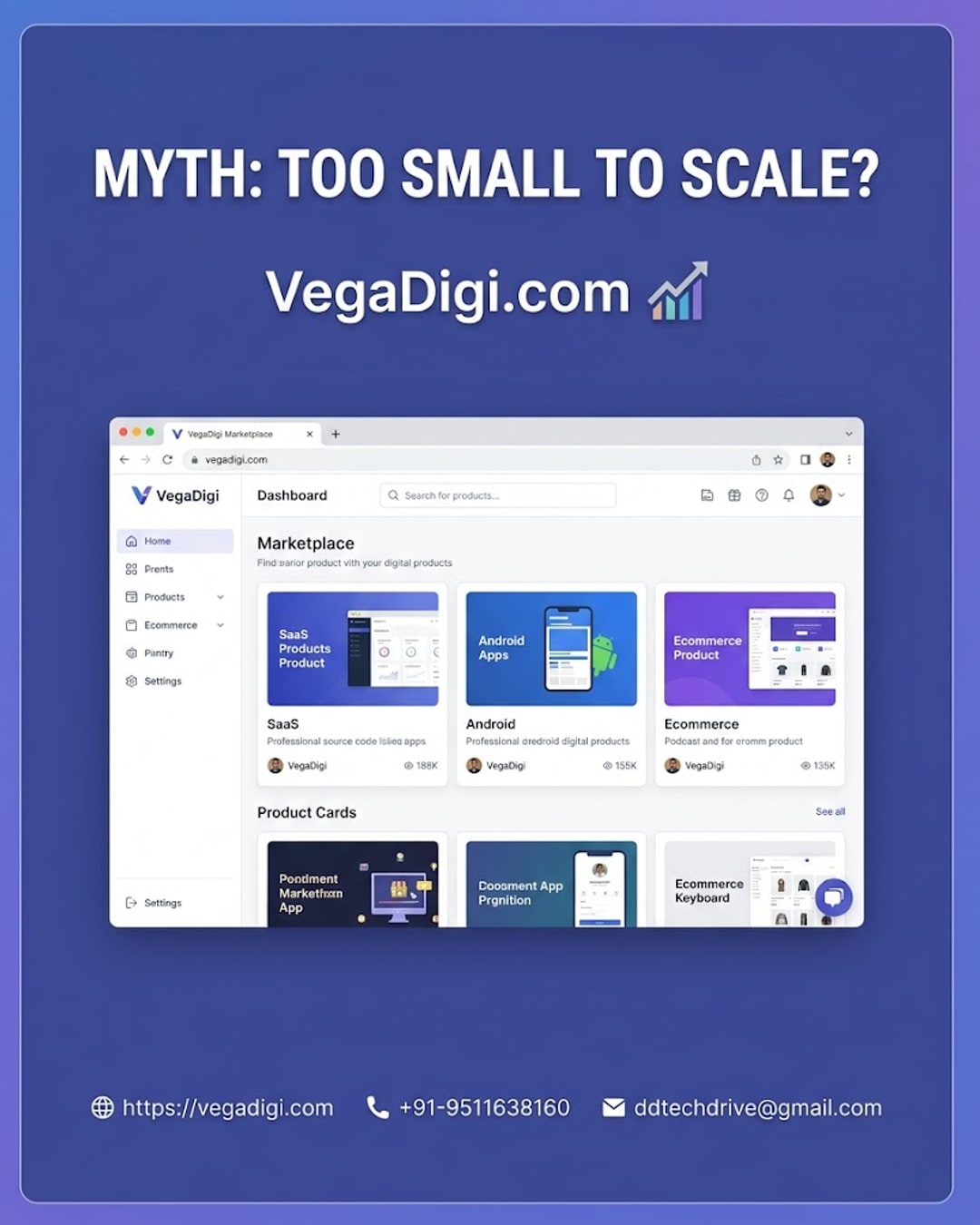
If you have spent any time in developer or startup circles, you have probably heard this line: ready-made source code is fine for a quick side project, but not for anything you actually plan to grow. It sounds reasonable on the surface, but it does not hold up once you look at how software projects actually evolve. Here is what is really going on, and what it means for anyone considering a starting point instead of building from zero.
Where This Myth Comes From
The idea probably comes from early, very basic templates and scripts that were rigid, hard to modify, and never meant to be extended. That reputation stuck, even as the quality and flexibility of ready-made source code improved significantly over time. People assume that because a product had a starting point that was not custom-coded from scratch, it is somehow capped in what it can become.
A Foundation Is Not a Ceiling
Think about it this way: a custom-built application also starts as a blank foundation, just one written from scratch instead of adapted from existing code. Neither path guarantees scalability by itself. What actually determines whether a project scales is the architecture decisions, the customization work, and the ongoing setup and maintenance that happen after the starting point - not whether that starting point was written from zero or sourced as ready-made code.
What Ready-Made Source Code Actually Gives You
On a platform like VegaDigi, ready-made source code across categories such as SaaS scripts, Android app source code, PHP scripts, WordPress themes and plugins, and e-commerce solutions is meant to be a starting point. The workflow is straightforward: discover a product that fits your use case, buy it, customize it to match your requirements and branding, set it up, and launch. Nothing about that process locks a project into staying small.
What Determines Whether a Project Scales
Scalability comes down to a handful of practical things regardless of where the code originated - how the project is customized, how well it is set up and configured, and how it is maintained and extended as requirements grow. A developer or team that treats ready-made source code as a real foundation, rather than a finished product, is in the same position as any team building from scratch, just further along at the start.
What This Means If You Are Choosing a Starting Point
If you are a developer, freelancer, startup founder, or agency deciding whether to build from zero or start with existing source code, the size or ambition of your eventual project is not something the source alone determines. It is worth evaluating any ready-made source code the same way you would evaluate a custom build: does it fit your requirements, and does it give you a solid enough base to customize and grow from.
My take: if you are weighing 'ready-made vs from scratch' purely because you assume ready-made caps your growth, that assumption is not really the deciding factor. Look instead at whether the specific source code fits your project's requirements and how much customization work it will realistically need. A good foundation, customized properly, can absolutely support a project that grows well beyond where it started.