Myth Debunked: Ready-Made Source Code Means a Cookie-Cutter, Look-Alike Product
· VegaDigi Journal
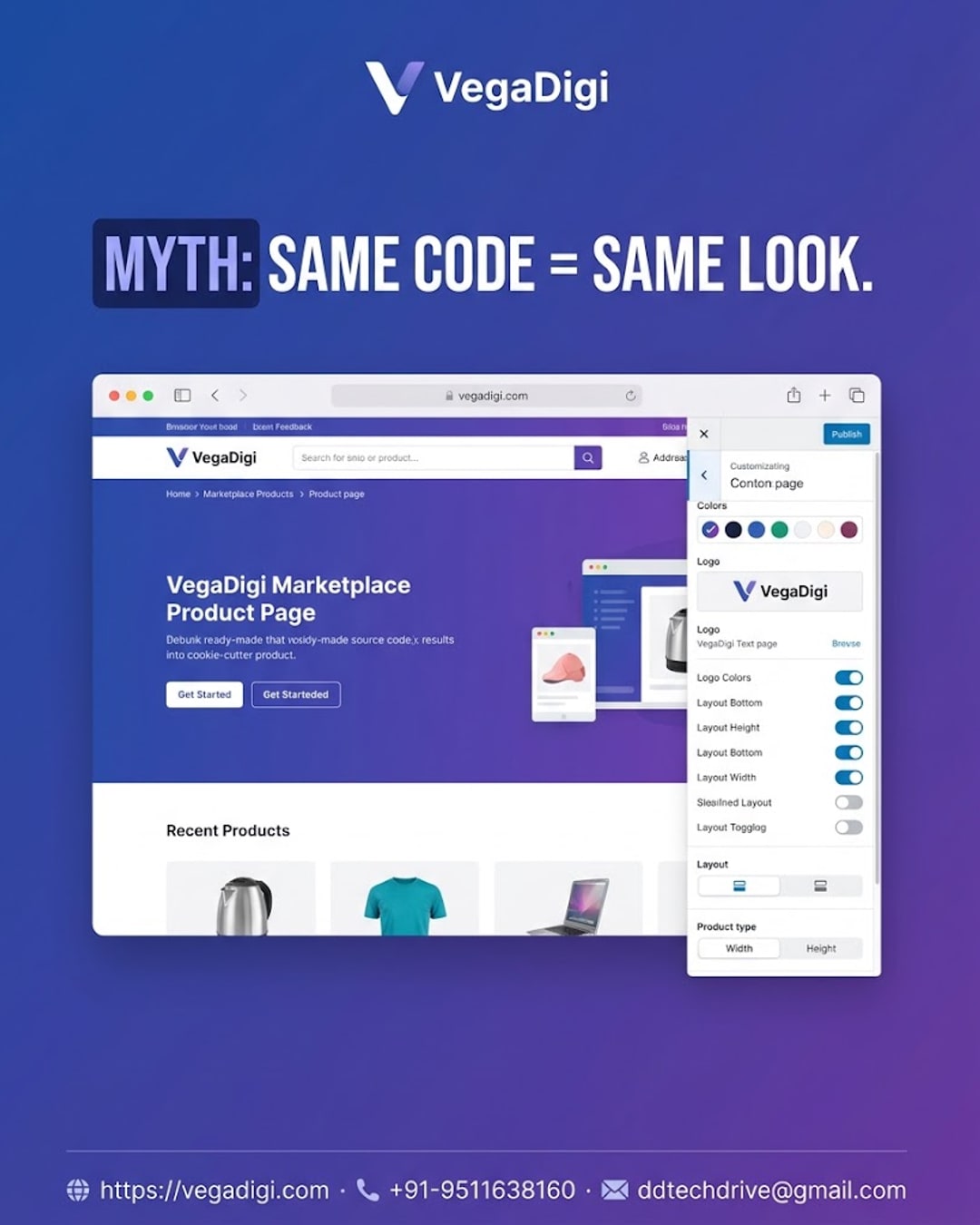
If you've ever hesitated to buy ready-made source code because you're worried your app or website will end up looking exactly like every other product built on the same foundation, you're not alone. It's one of the most common misconceptions around source code marketplaces — and it's worth clearing up before it stops you from finding a faster starting point for your next project.
Why this myth exists
The assumption makes sense on the surface. If two developers download the same source code, shouldn't the end result be identical? In practice, that's rarely how it plays out. Source code is a technical foundation — the backend logic, structure, and core functionality. What sits on top of that foundation, from branding to layout choices to feature configuration, is entirely up to whoever is building with it.
Customization is the actual product
Think of source code the way you'd think of a well-built house frame. Two homeowners could start with the same structural frame and end up with two completely different homes once paint, fixtures, layout changes, and personal touches are added. The same logic applies to a SaaS script, an Android app source code, or a WordPress theme. Your logo, color palette, content, UI adjustments, and feature tweaks are what shape the final experience — not the underlying code alone.
What actually changes when you customize
On a platform like VegaDigi, customization can touch branding elements, layout and design choices, specific feature configuration, and how the product is set up for your particular audience or workflow. The extent of customization depends on the specific product and your own development effort, but the point stands: the source code is a starting point, not a locked-in final design.
Where the real time savings come from
The value of ready-made source code isn't that it eliminates development work — it's that it removes the need to build foundational components from scratch. Instead of starting with a blank screen and building login systems, dashboards, or core app structure from zero, you start with a working foundation and spend your time on what makes your product distinct: your brand, your positioning, your specific business logic.
What this means if you're evaluating source code
Before buying, it's worth looking at how much a product's UI and structure can realistically be adjusted for your use case. Some products offer more flexibility than others, and understanding that upfront helps set the right expectations for how much customization work lies ahead.
My take: if you're building something you plan to publicly launch and brand as your own, don't skip the customization step — it's not optional polish, it's the part that actually makes the product yours. Budget real time for it, even if it's less time than building from scratch would take. If your project needs heavy, highly specific functionality, spend a few extra minutes comparing source code options before you buy, so the foundation you start with needs less rework to become the product you actually envisioned.