Old Way vs VegaDigi Way: No-Code Builders With Locked Templates vs Real, Ownable Source Code
· VegaDigi Journal
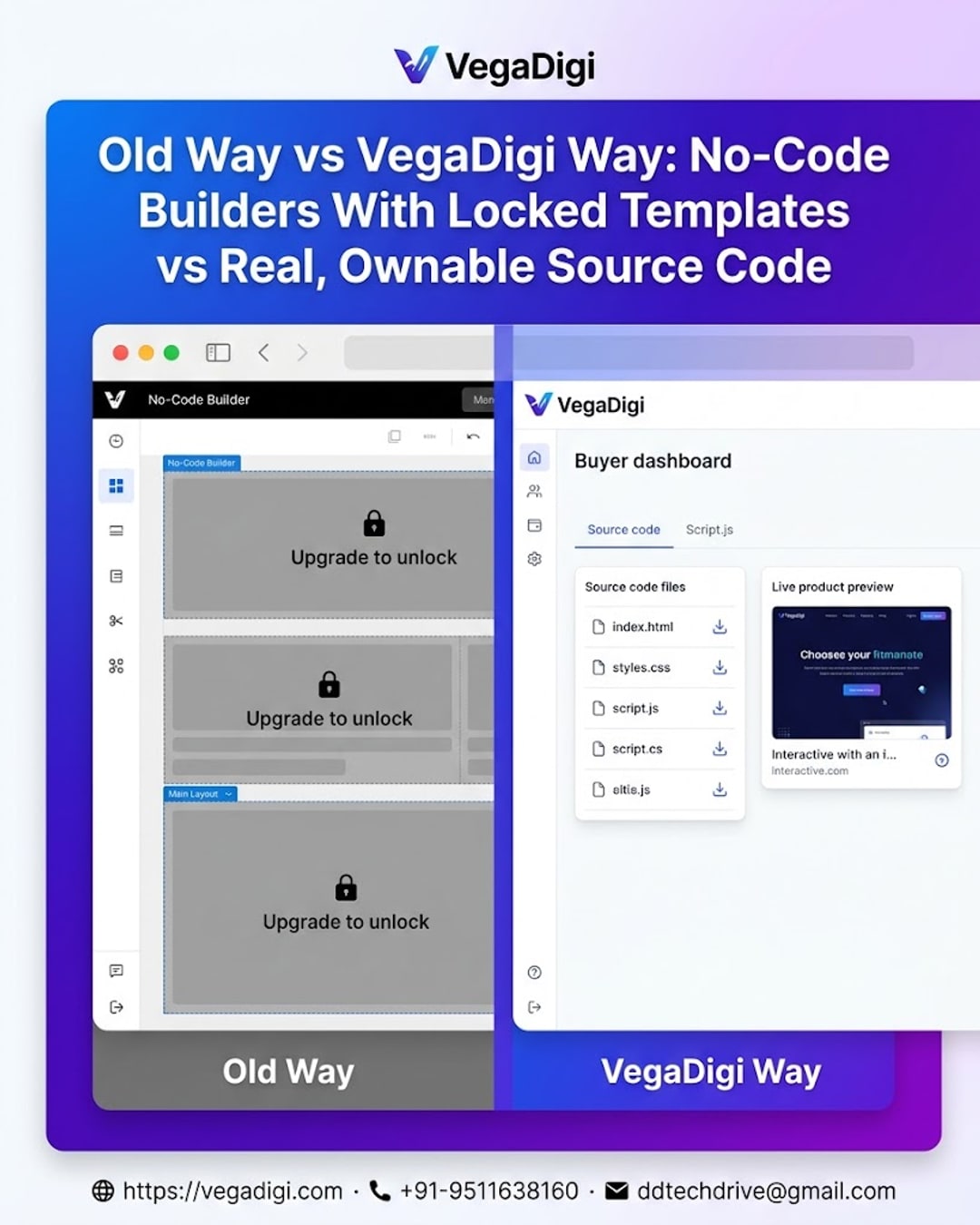
A lot of founders start their first website or app on a no-code builder. It's quick, it's visual, and you can have something live in an afternoon. But there's a moment - almost every builder-user hits it eventually - where the platform says 'upgrade to unlock this' or simply can't do what your business needs. That's the moment worth planning for before it happens, not after.
Where no-code builders shine (and where they stop)
No-code tools are genuinely useful for testing an idea fast. Drag, drop, publish. The trouble starts when your requirements get specific - a custom workflow, a particular integration, a design element the template just won't allow. At that point you're not building your product anymore, you're negotiating with the platform's roadmap.
The hidden cost of platform lock-in
Beyond feature limits, there's a quieter cost: your site or app often lives entirely inside that builder's ecosystem. Migrating out later can mean rebuilding from scratch, because there's no real, exportable source code underneath - just configuration sitting on someone else's platform.
What 'owning your source code' actually changes
This is where VegaDigi's approach is different. Instead of a locked builder, you start with real, ready-made source code - for WordPress, SaaS, e-commerce, Android apps, and more. You can open the files, customize the logic and design, connect it to the tools you already use, and host it wherever makes sense for you. It's not a no-code shortcut that skips work entirely - you still customize, set up, and launch - but you're working with something you fully control, not something you're renting access to.
Who actually benefits from this approach
Developers get a real codebase to extend instead of a black box. Startups and agencies get a foundation that can scale past a template's ceiling. Non-technical founders still benefit, because a developer working from real source code can move faster than one starting from an empty canvas or fighting a builder's constraints.
My take: if you're validating a very simple idea and speed is everything, a no-code builder can still make sense for a quick test. But if you already know your project needs real customization, integrations, or room to scale, starting with ready-made source code you actually own will save you a much more painful migration later. It's worth browsing what's already built on VegaDigi before you commit to a platform that might box you in six months from now.