Old Way vs VegaDigi Way: Weeks Writing a Requirements Document vs Browsing a Live Working Demo Today
· VegaDigi Journal
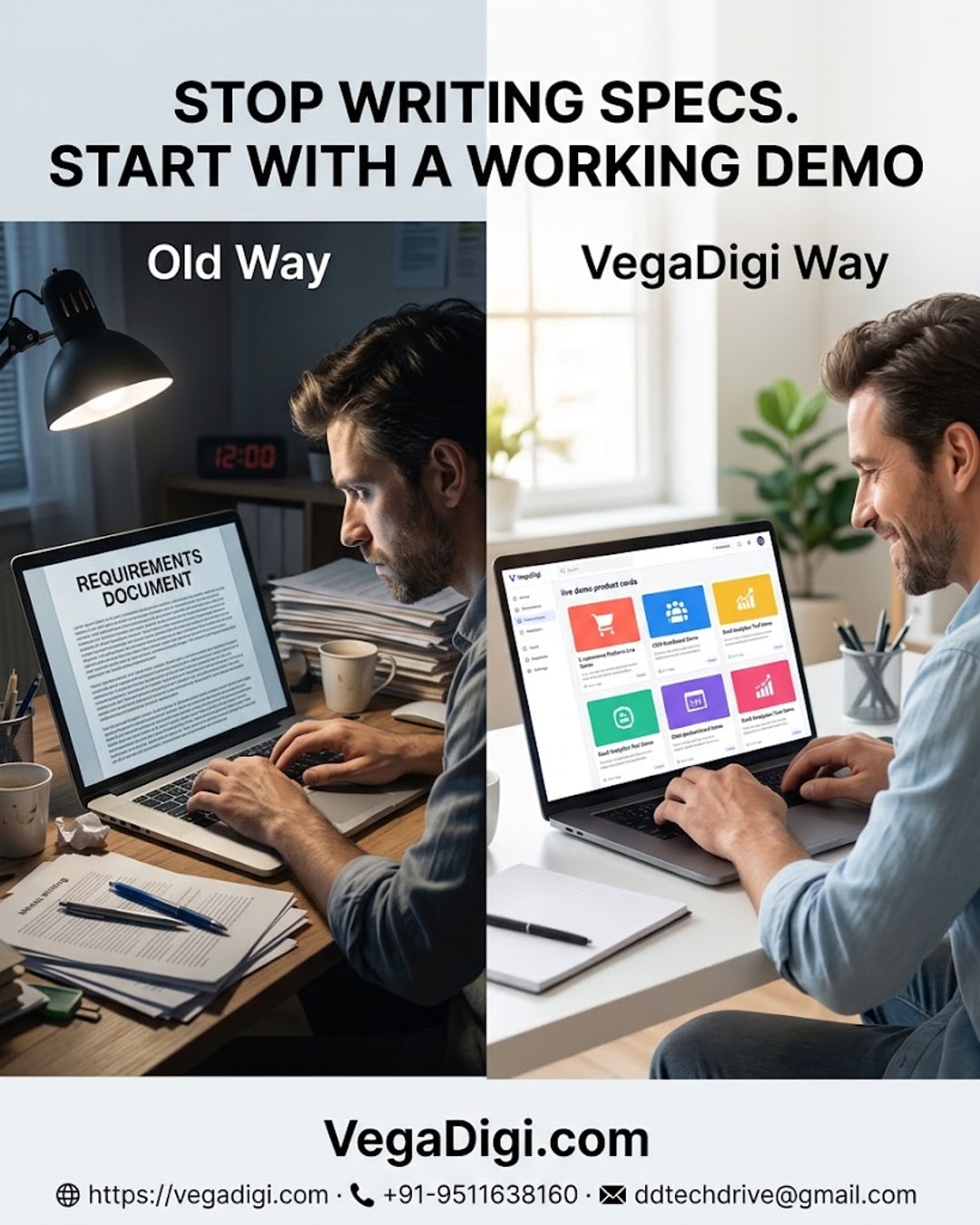
If you have ever kicked off a software project, you know the drill: before a developer writes a single line of code, someone has to sit down and document exactly what the product should do. Pages of requirements, user stories, wireframes, and endless clarifying emails follow. It can eat two to four weeks before real development even begins - and that is before anything gets tested.
VegaDigi flips that sequence. Instead of describing what you want on paper and hoping the final build matches your vision, you browse working, ready-made source code across categories like SaaS scripts, e-commerce platforms, WordPress themes, Android apps, and business management software. You see the actual product first, then decide if it fits.
Why requirement documents slow projects down
Writing a proper spec takes real time and real expertise. Vague requirements lead to scope confusion later, and detailed ones take weeks to produce correctly. Either way, your idea sits on paper while your competitors may already be live.
Seeing a working demo removes the guesswork
A demo answers questions a document never can. Does the dashboard actually feel usable? Does the checkout flow make sense? Is the admin panel something your team could manage? With VegaDigi, that evaluation happens before you spend a rupee or a single development hour, not after.
From demo to your own customized product
Once you find ready-made source code that matches your idea, the next step is not a finished business handed to you - it is a solid foundation you customize, set up, and launch on your own terms. Branding, specific workflows, and integrations still need real work. But you are refining something proven instead of building from a blank file.
Who benefits most from this approach
Startup founders validating an idea quickly, agencies that need to show clients something tangible fast, freelancers juggling multiple projects, and non-technical entrepreneurs who need development support all gain from starting with a working reference point instead of a document nobody outside the dev team ever reads carefully.
My take: if your team is currently stuck in a requirements-gathering phase that has dragged past a couple of weeks, it is worth pausing and checking whether a ready-made source code foundation already covers seventy percent of what you are trying to spec out. You will still customize, still test, still configure - but you will be doing it against something real instead of a document full of assumptions. For fast-moving startups and agencies juggling client deadlines, that shift alone can be the difference between shipping this quarter or slipping to the next.