Online coaches and course creators launching a learning management system (LMS) with a ready-made VegaDigi e-learning script
· VegaDigi Journal
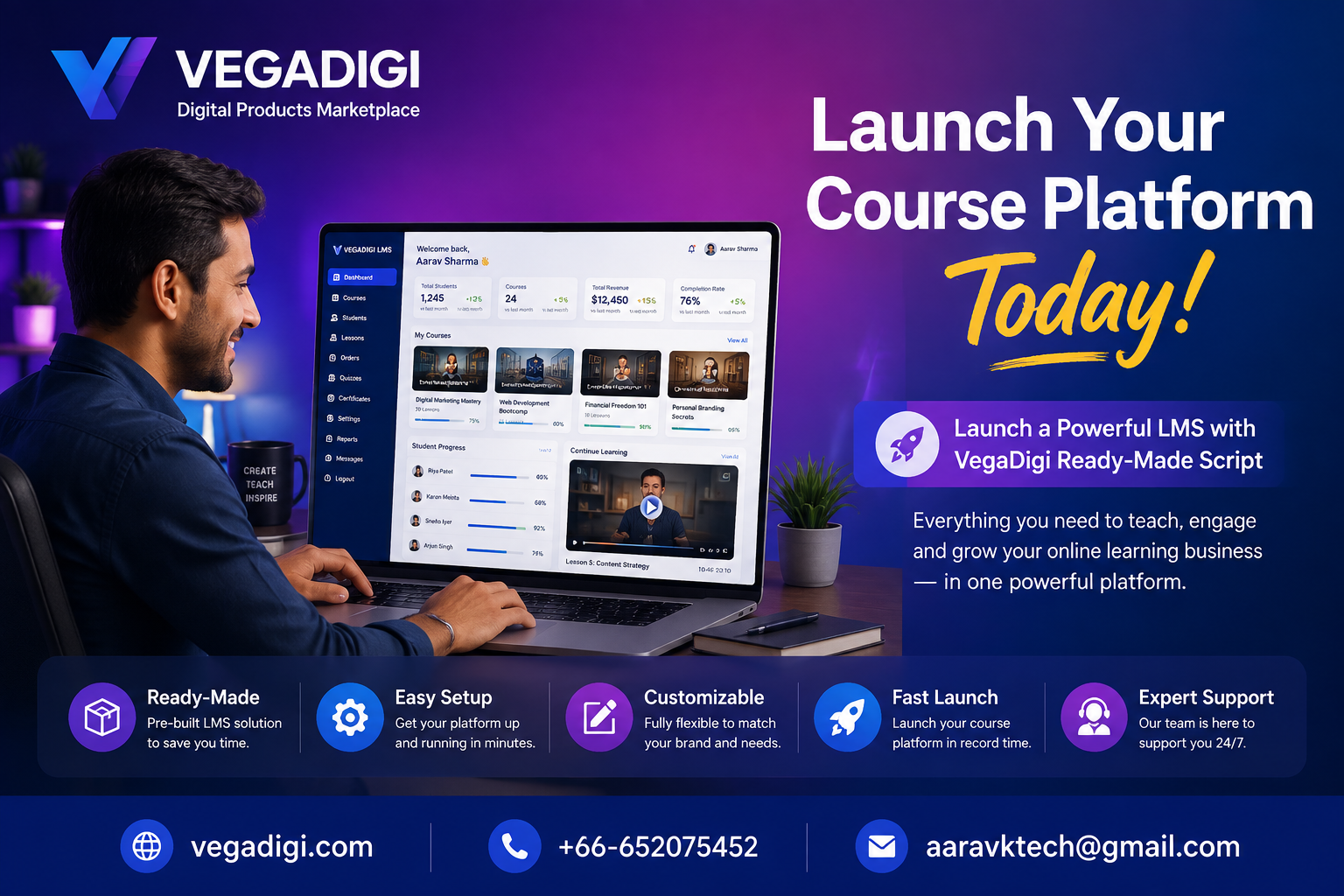
If you're a coach or course creator planning to launch your own learning platform, you've probably realized the tech side isn't simple. Video hosting, student logins, progress tracking, payment integration - it adds up fast. This post looks at why more educators are starting with ready-made LMS source code instead of building from scratch, and what that actually means for your launch timeline.
The real cost of building an LMS from zero
Most course creators underestimate how much goes into a functioning learning management system. It's not just a video player - you need course structuring, student dashboards, progress tracking, quizzes, certificates, and often a mobile-friendly view. Hiring a developer to build all of this from a blank canvas usually means months of planning, wireframing, coding, and testing before you even upload your first lesson.
What a ready-made e-learning script actually gives you
A ready-made LMS script on a marketplace like VegaDigi isn't a finished business - it's a working foundation. You get the core structure already built: course listings, student accounts, lesson players, and an admin panel to manage it all. From there, the real work is customization - your branding, your course categories, your pricing structure, your domain setup. It shortens the distance between idea and a working platform, but it doesn't remove the setup work entirely.
Customize, don't just install
One mistake creators make is expecting to buy source code and launch it unchanged. The value of ready-made e-learning source code is that your customization work is layered on top of a tested structure instead of starting with an empty repository. You're still deciding how your courses will be organized, how students will be onboarded, and how your brand shows up - the source code just means you're not writing that student dashboard logic from scratch.
Who this approach fits best
This path tends to work well for coaches, trainers, and small edtech founders who understand their course content deeply but don't want to spend six months on backend development before they can test the platform with real students. It's less suited to creators who need a highly specialized learning experience that no existing script structure supports - in that case, custom development may still make sense.
My take: if you're a coach or course creator wanting to get a real course platform in front of students without a long development runway, browsing ready-made LMS source code on a marketplace like VegaDigi is worth doing before you post a job listing for a custom build. Look at the live demo closely, check what's actually included, and be honest with yourself about how much customization your course model needs. If it's a fairly standard course-and-student setup, a ready-made foundation can save you real time. If your learning model is genuinely unusual, budget for a developer who can adapt it properly rather than forcing a mismatch.