Opportunity Cost ROI: What Every Week You Spend Building From Zero Actually Costs Your Business
· VegaDigi Journal
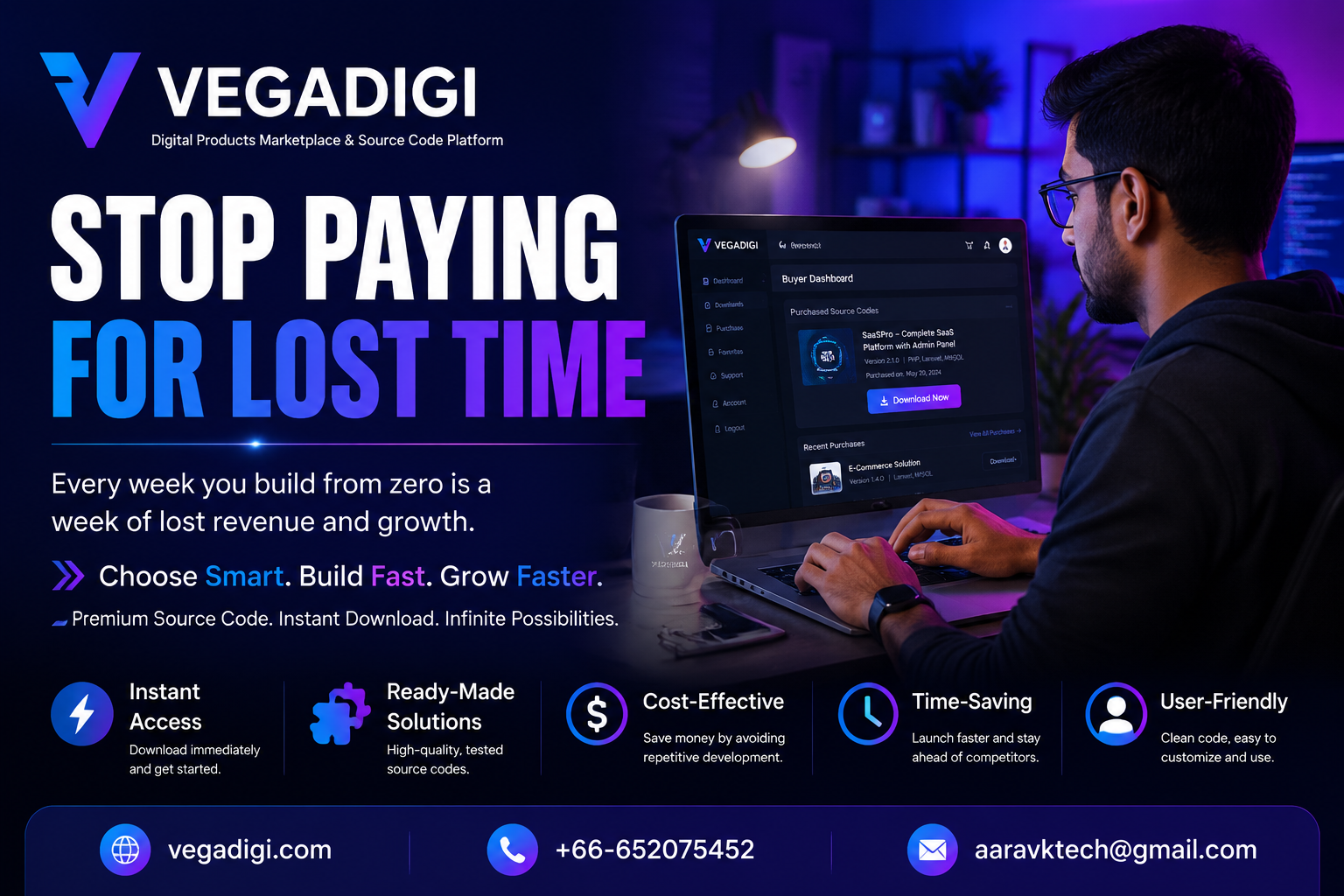
Most founders calculating development costs stop at developer rates and project timelines. But there's a bigger number hiding in the background: the cost of time itself — every week your product isn't live is a week of feedback, users, and revenue you simply don't get. This article breaks down that opportunity cost and how a ready-made source code approach changes the math.
Why Time-to-Launch Matters More Than the Build Budget
A six-month build isn't just six months of salaries or freelance invoices. It's six months where your competitors could be signing customers, gathering feedback, and iterating — while your product is still in a code editor. For seasonal or trend-driven businesses, this delay can mean missing the exact window your idea was strongest in.
What Ready-Made Source Code Actually Changes
Buying source code doesn't mean zero development work — that's not a realistic promise, and nobody should make it. What it does change is the starting point. Instead of designing and coding core modules from scratch, you begin with a working foundation and move straight into customization, setup, and configuration for your specific business. That shift in starting point is where the real time savings tend to show up.
Counting the Real Categories of Cost
When you map out true project cost, it usually falls into a few buckets: planning and requirement-gathering time, core development time, testing and fixing time, and the opportunity cost of a delayed launch. Ready-made source code from a marketplace like VegaDigi is aimed squarely at reducing the first two — the requirements are already implemented as working functionality you can see in a live demo, and the core build is already done.
How to Think About This for Your Own Project
Before assuming a from-scratch build is your only option, it's worth checking whether a suitable foundation already exists — across categories like WordPress, PHP scripts, SaaS starters, Android app source code, ecommerce platforms, or business management software. If one fits your use case, you're not skipping development, but you are skipping the part where you build the same foundational modules every other project also needs.
My Take
If you're early-stage and every week matters more than every rupee, it's worth browsing a marketplace before you open a blank IDE — even if you end up doing significant customization, you're customizing something that already runs, not staring at an empty screen. If your project genuinely needs something highly specialized that no existing foundation covers, building from scratch still makes sense. But for most common business types — booking systems, ecommerce stores, SaaS dashboards — checking what's already built first is simply the smarter starting move.