Portfolio Projects for CS Students: Learn From Real Source Code, Not Just Tutorials
· VegaDigi Journal
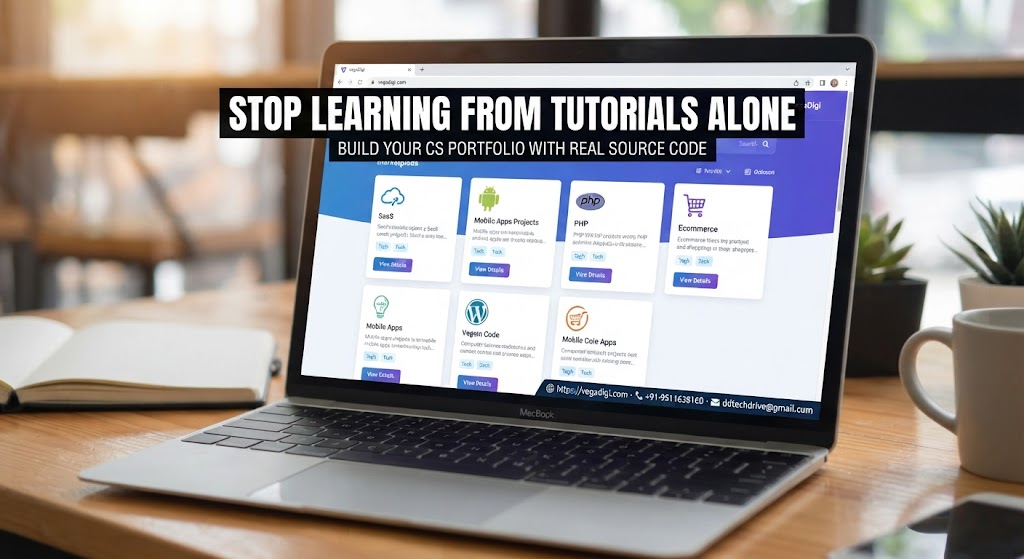
If you're a computer science student trying to build a portfolio that actually gets noticed, you've probably hit the same wall as everyone else: every tutorial ends with the same to-do list app, weather app, or basic blog. Recruiters have seen it a thousand times. What actually helps is learning from real, working codebases — and that's where a marketplace like VegaDigi can fit into your learning process.
Why tutorials only get you so far
Tutorials are great for learning syntax and basic concepts, but most walk you through one feature at a time in isolation. They rarely show you how a login system, an admin dashboard, and a customer-facing app all connect inside one real project. That connective structure is exactly what employers want to see you understand.
Learning from ready-made source code
VegaDigi is a digital products marketplace and source code platform where developers, students, and businesses can explore ready-made projects across categories like WordPress, PHP scripts, SaaS scripts, Android app source code, and e-commerce solutions. For a student, this isn't about skipping the work — it's about having a realistic foundation to study, break apart, and rebuild in your own way.
Turning a source code project into a real portfolio piece
The path looks something like this: discover a project in a category you're interested in, review how it's structured, then customize it — change the design, add a feature, connect it to your own data, or rework part of the logic. Setting it up yourself and getting it running is part of the learning. The end result is a project you can actually explain in an interview, because you understand what's happening under the hood.
What this is not
This approach isn't a shortcut to a finished, zero-effort project, and it's not a replacement for genuinely learning to code. You still have to read the code, understand it, and put in the work to customize and deploy it. What it changes is the starting point — instead of a blank file, you start with something that resembles real, professional software.
My take
If you're a first or second-year student still getting comfortable with the basics, keep doing tutorials — they build your foundation. But once you're ready to build something for your resume or GitHub, don't just build your eleventh to-do app. Pick a category you're genuinely interested in on a platform like VegaDigi, study a real project's structure, and put your own spin on it. That's the kind of project that actually gets a second look.