stop rewriting payment gateways and user management for every new app
· VegaDigi Journal
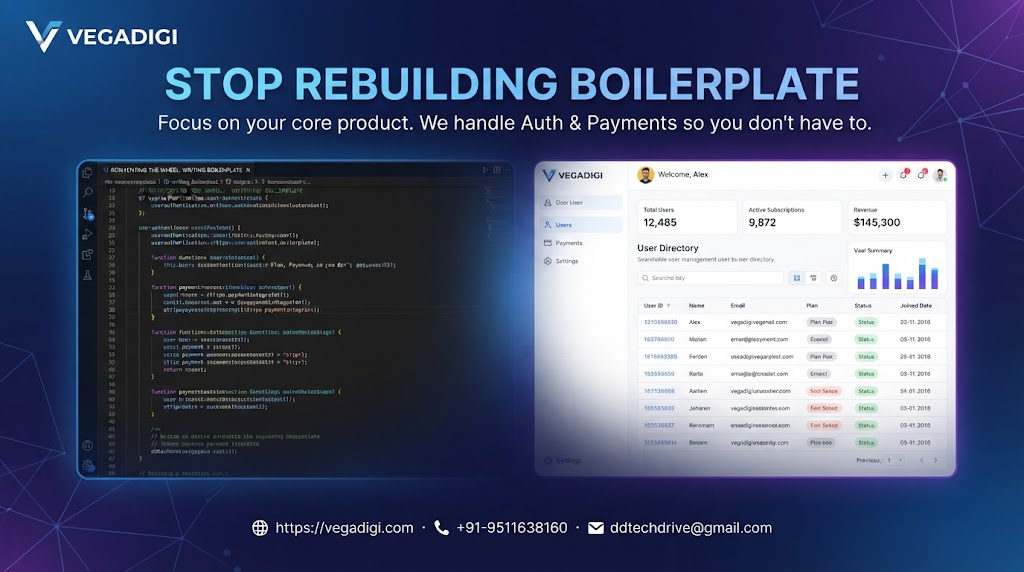
If you have built more than a couple of web applications, you already know the sinking feeling of opening a brand new code repository. Before you write a single line of unique business logic, you are knee-deep in setting up user registration, password hashing, JWT tokens, role-based access control, and database migrations. It is necessary work, but it is also repetitive work that eats up weeks of valuable calendar time.
The Illusion of the Blank Slate
There is a certain romance to starting a project with a completely blank screen. You feel like a digital architect with total control. But in reality, building common software functionality from scratch does not make your application better or more secure. It just delays the moment when you actually start working on the features that make your product unique. For solo developers, freelancers juggling client deadlines, and lean startups trying to validate an idea quickly, spending three weeks on boilerplate infrastructure is an expensive luxury.
A Smarter Starting Foundation
Experienced engineers understand that code reuse is the key to velocity. Instead of reinventing user management tables or dashboard layouts for every client or internal venture, many teams now rely on existing source code assets. When you use a structured codebase as your starting point, you bypass the initial setup friction. You get a pre-tested architecture where routing, database connectivity, and UI components are already wired together correctly.
How to Integrate Source Code Assets Into Your Workflow
Adopting a ready-made foundation does not mean losing control of your project. The trick is to treat the acquired source code as a mature boilerplate rather than a finished black box. First, audit the codebase structure to understand its routing and state management. Second, strip out any modules or styles that do not align with your brand identity. Finally, inject your custom business logic and unique UI requirements right where they belong. This hybrid approach lets you maintain full customizability while slashing your initial development timeline significantly.
My Take
If you are working on a strict client deadline or trying to push an MVP out the door before your runway gets tight, building standard software features from scratch is rarely a smart use of your hours. Grab a solid, clean source code foundation from a marketplace like VegaDigi, adapt it to your exact requirements, and spend your energy where it actually counts: building your core product value. Check out available templates and scripts at https://vegadigi.com to see if a ready foundation fits your next build.