The 60% Problem: How Much Developer Time Gets Burned Rebuilding Login, Payments and Admin Panels That Already Exist
· VegaDigi Journal
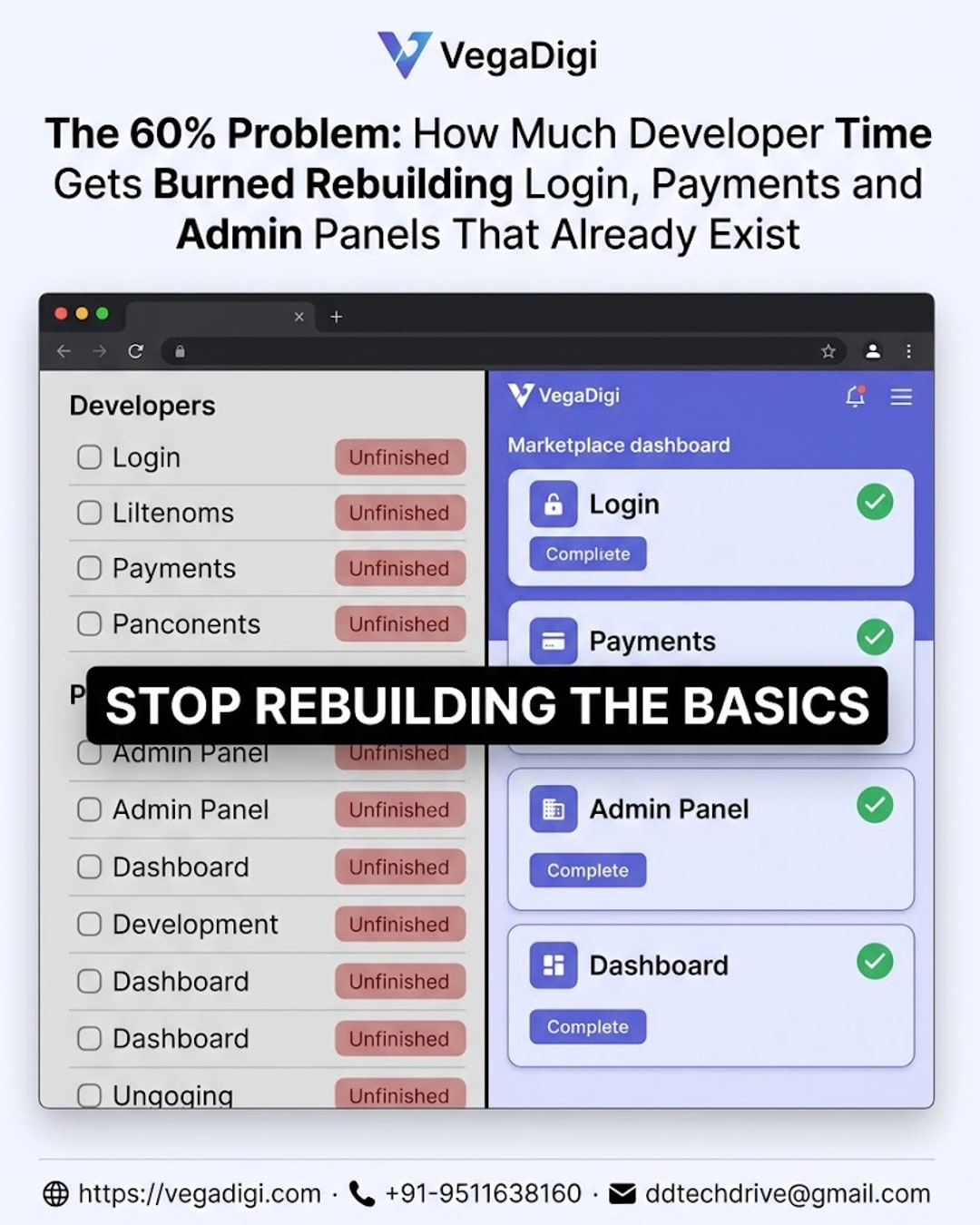
Open up almost any new software project and the first few weeks look surprisingly similar, no matter what the product is supposed to do. A login screen. Password reset. A payments integration. An admin panel to manage users and content. None of these are the actual product. They are the toll you pay before you even get to build the thing that matters.
This is one of the most overlooked costs in software development. It is not glamorous, it does not show up in a pitch deck, but it eats into timelines every single time a project starts from a completely blank folder.
Why the basics take longer than they should
Authentication alone involves password hashing, session handling, email verification, and edge cases around account recovery. Payment integration means webhooks, error states, currency handling, and testing across scenarios that are easy to overlook. Admin panels need role permissions, data tables, filters, and enough polish that a non-technical team member can actually use them. Individually, none of this is exotic. Together, it is weeks of groundwork before a single feature that makes the product unique gets touched.
What changes when you start from existing source code
This is the core idea behind a marketplace like VegaDigi. Instead of opening an empty editor, developers, startups and agencies can start from ready-made source code where the foundational pieces already exist in some form. From there, the real work becomes customization: adjusting flows, adding the features specific to your business, and shaping the product around your actual users. It does not remove the work of building a good product. It changes where your time goes.
Where this matters most
Freelancers juggling multiple client projects feel this most acutely, since every new client often means rebuilding the same foundation again. Agencies quoting timelines to clients benefit from a more predictable starting point. Startups trying to get an MVP in front of early users care less about reinventing infrastructure and more about proving the idea works. Even solo developers learning by building real projects can benefit from studying an existing, working codebase rather than assembling one from scratch.
What this is not
Starting from ready-made source code is not a shortcut to a finished business, and it is not a promise that no further development is needed. Every product still needs to be customized, configured, tested against your own requirements, and set up properly before launch. What it does is remove the repetitive starting tax so that the time you do spend goes toward the parts of the product that are actually yours.
My take: if you are constantly rebuilding the same core features project after project, it is worth browsing a marketplace like VegaDigi before your next kickoff meeting. Look for source code close to what you need, check the demo, understand what is included, and then plan your customization work around it. You will still be building. You will just be building less of the same thing twice.