The 80% Rebuild Stat: Why Every App Recreates the Same 5 Core Modules From Scratch
· VegaDigi Journal
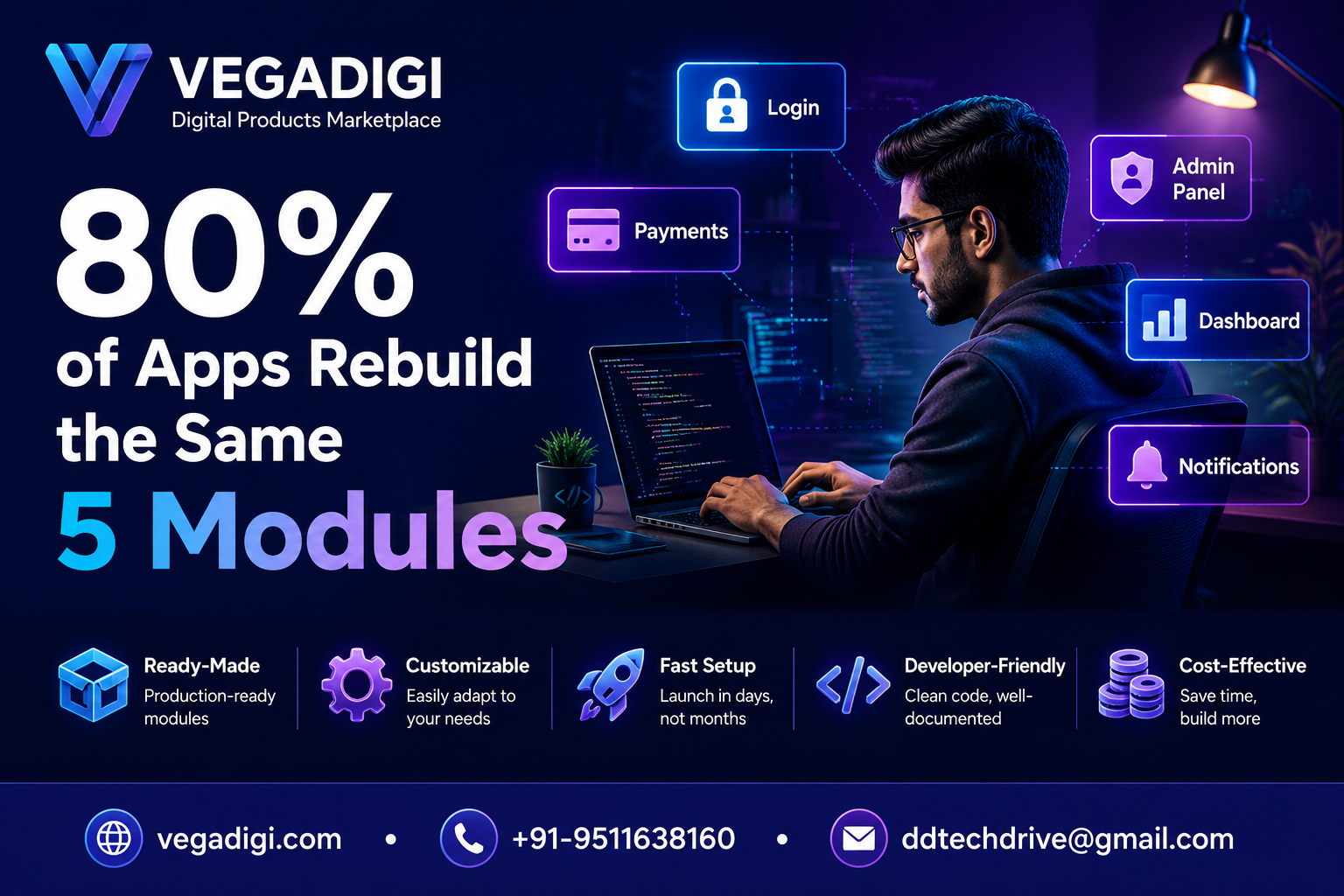
If you've worked on more than a couple of software projects, you've probably noticed something strange: no matter how different the businesses are, the early build phase always looks the same. A login screen. A payment integration. An admin panel. A dashboard. A notifications system. This article breaks down why that repetition happens across nearly every project, and what it actually costs you to keep starting from zero.
The Five Modules Nobody Escapes
Login and authentication, payment gateways, an admin control panel, a user-facing dashboard, and some form of notification system - these show up in a food delivery app, a SaaS tool, a booking platform, and a business management system alike. They're not what makes a product unique. They're what makes it functional at all. Yet teams treat them as fresh work every single time.
What This Repetition Actually Costs
Every hour spent rebuilding a login flow or wiring up a payment gateway is an hour not spent on the feature that actually differentiates your product. Multiply that across five modules, and a meaningful chunk of any project's early timeline goes toward things that have already been solved - repeatedly - by countless other teams before you.
Starting From an Existing Foundation
This is where ready-made source code changes the equation. Instead of writing an authentication system from a blank file, you start with one that already exists, then customize it to fit your branding, your business logic, and your specific requirements. The same applies to admin panels, dashboards, and notification systems. You're not skipping the work of making it yours - you're skipping the work of making it exist in the first place.
What This Doesn't Mean
It's worth being clear: ready-made source code is a starting point, not a finished business. You'll still need to customize it, configure it for your use case, and set it up properly before launch. The value isn't zero effort - it's not re-deriving the fundamentals that every app needs anyway.
Where VegaDigi Fits In
VegaDigi is built around exactly this idea. Across categories like SaaS scripts, e-commerce platforms, business management software, Android app source code and WordPress products, many listings already include these foundational modules. You browse, evaluate a live demo, buy the source code that fits, and then move straight into customization instead of groundwork.
My Take
If you're a solo developer or a small team with limited time, this kind of head start is hard to ignore - reinventing login and payment flows for the tenth time isn't where your effort should go. If you're a larger team with very specific architectural needs, you might still build some modules custom, but even then, using ready-made source code for the boring, repetitive parts frees up your best developers for the work that actually needs them. Either way, it's worth checking what already exists before you write module number six hundred and one.