The Classroom of 2032: A Vision Where Students Learn to Launch, Not Just to Code
· VegaDigi Journal
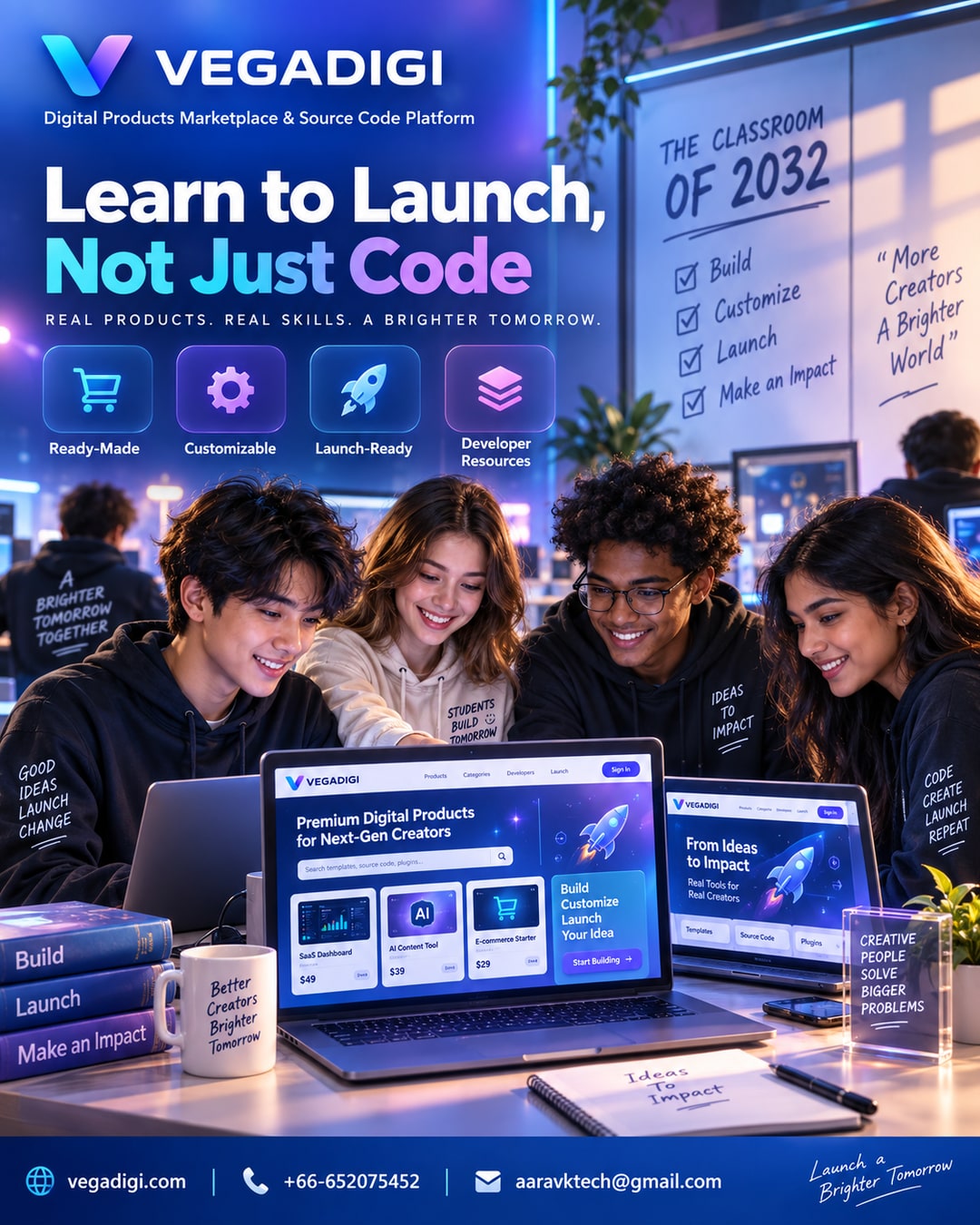
Picture a computer science class a few years from now. Instead of spending the first month on empty editors and hello-world exercises, students open a marketplace, pick a real project foundation close to an idea they care about, and spend their energy on customizing, configuring and launching it. Sound far off? Parts of it are already here.
Why today's coding education still starts from zero
Most programming courses are built around the assumption that understanding comes only from typing everything yourself, line by line. That's valuable for fundamentals. But it also means many students graduate having built dozens of toy projects and zero real, launchable products. The gap between learning to code and learning to ship stays wide.
What changes when ready-made source code enters the picture
Read-made source code doesn't replace learning — it changes what students practice. Instead of only writing boilerplate authentication or basic CRUD screens for the tenth time, a student could study a working ecommerce script, a SaaS starter, or an Android app foundation, and focus on the harder, more valuable skill: adapting existing code to a specific goal, then setting it up and getting it live. That's closer to what actual developer jobs and startups look like.
Students, non-technical founders and the same starting point
Here's the interesting part — this shift doesn't only help students. A non-technical founder with some development support, a freelancer taking on a new client, and a computer science student are all solving a version of the same problem: they have an idea, and they need a real foundation to build from rather than a blank file. A marketplace of ready-made source code serves all three audiences with the same underlying model — discover, buy, customize, set up, launch.
What this vision does not mean
It's worth being clear about what this future isn't. It isn't students skipping the fundamentals, and it isn't ready-made code magically becoming a finished business without further work. Customization, setup, testing and real understanding of what's under the hood still matter — arguably more, since you now need to read and reason about someone else's code, not just your own.
Why this matters now, not just later
You don't need to wait for classrooms to catch up. Developers, students, freelancers and founders can already explore ready-made source code across categories like WordPress, PHP scripts, Android apps, SaaS starters and ecommerce platforms on VegaDigi, and start practicing exactly this skill — evaluating a foundation, then making it their own.
My take: if you're a student or an early-career developer, don't wait for your course to teach this. Go browse a real marketplace, pick something in a category you're curious about, and try customizing it end to end — that hands-on process will teach you more about real-world development than another isolated tutorial project ever will.