The Deployment Gap: What Happens After You Download the ZIP File (and How VegaDigi Closes It)
· VegaDigi Journal
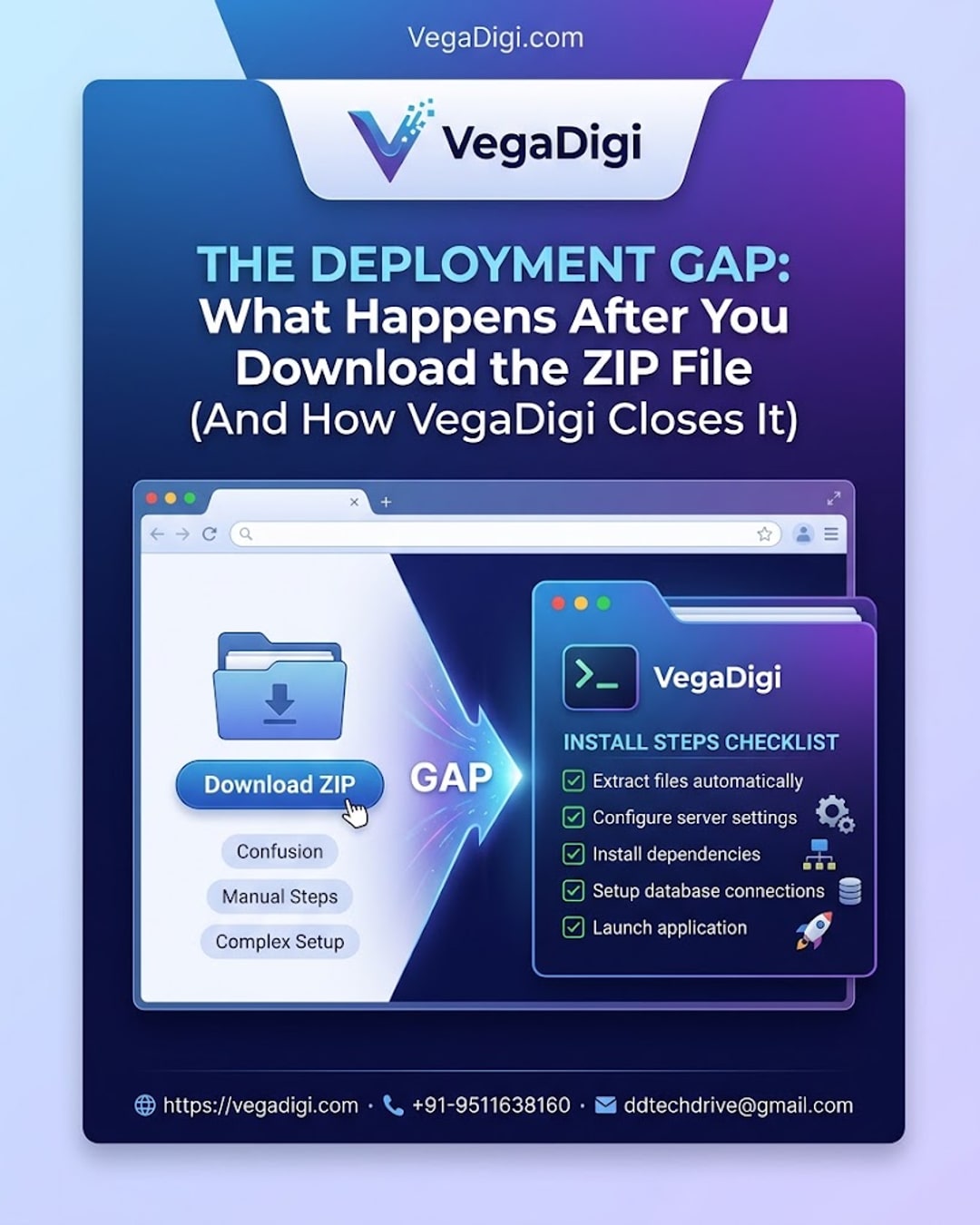
Here is a scenario that plays out more often than anyone likes to admit: someone finds the perfect script or template, buys it, downloads the ZIP file, and then... it just sits there. Not because the code is broken. Not because the purchase was a mistake. But because the space between owning a file and running a project is genuinely confusing if nobody walks you through it.
Why the download-to-launch gap exists
Most people assume that buying ready-made source code means the hard part is over. In reality, unzipping a folder and seeing a mix of files, dependencies, and configuration settings can feel just as intimidating as an empty code editor - sometimes more, because now you are trying to understand someone else's structure instead of building your own from familiar ground.
What actually needs to happen after purchase
Getting from a downloaded file to something running in a browser or on a phone usually involves a few concrete steps: reviewing the folder structure, understanding how the pieces connect, adjusting configuration for your own environment, and then customizing it to match your brand or requirements. None of this is instant, and no legitimate source code marketplace should claim otherwise. What matters is whether that path is clear or whether you are left guessing.
How VegaDigi approaches this
VegaDigi is built around a simple sequence: discover, buy, customize, setup, launch. That last step - setup - is exactly where the ZIP-file gap tends to open up for buyers, so it is treated as part of the product experience rather than an afterthought. The idea is not that every product requires zero technical effort. It is that you should not be left wondering what to do the moment the download finishes.
Who this actually helps
This matters most for people who are confident in their idea but less confident about the mechanics of getting a project live - freelancers juggling multiple client builds, non-technical founders who have development support but need a starting point, and even experienced developers who would rather customize an existing foundation than reconstruct login screens and admin panels from scratch for the tenth time.
Setting realistic expectations
It is worth being direct here: source code is a starting point, not a finished business. Customization and setup still take real work. What changes is where you are starting from - a structured foundation instead of a blank screen - which is a meaningfully different starting line even if it is not a finish line.
My take: if you have ever bought a template, script, or app source code and let it sit unopened because the next step wasn't obvious, that is not a personal failure - it is a product experience failure. Before buying source code anywhere, check whether the listing actually tells you what happens after checkout. If it does, you are far more likely to end up with a live project instead of another forgotten folder on your desktop.