The Last-Mile Problem: why solo developers abandon side projects at the boring 80% (auth, payments, admin panels) and how ready-made VegaDigi source code covers that backbone so you can ship the 20% that's actually yours
· VegaDigi Journal
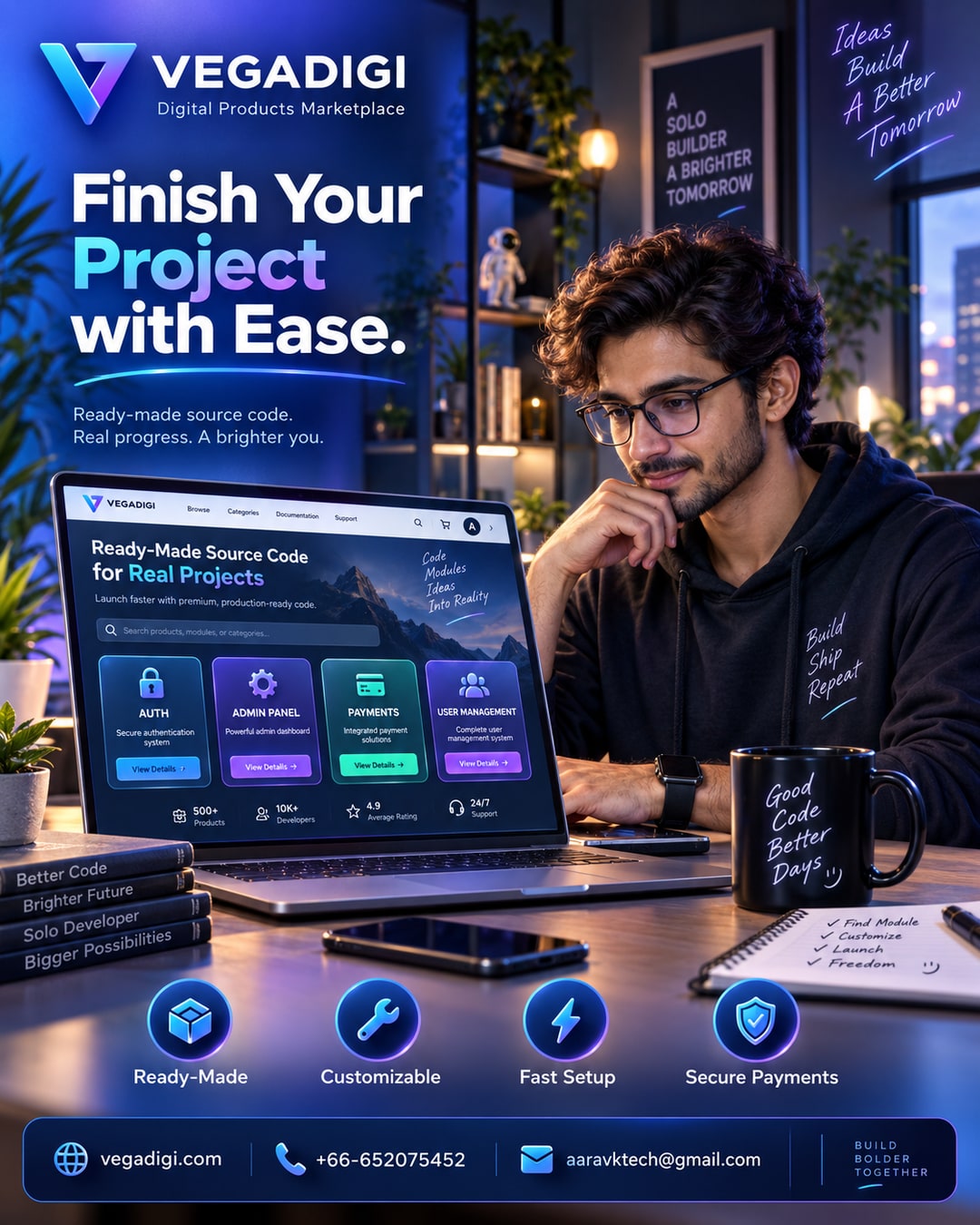
You had a great idea. You opened your editor, full of energy. Three weeks later, the project is still sitting there half-finished - not because the idea was bad, but because you're still wiring up login screens, building an admin panel, and figuring out payment integration. This is the quiet killer of most side projects, and it's worth understanding why it happens and what actually helps.
The boring 80% nobody warns you about
Every app - no matter how original the core idea - needs the same unglamorous scaffolding: user authentication, role-based access, an admin dashboard, notification systems, and some form of payment handling. None of this is the fun part. None of it is what made you excited about the project in the first place. And because it's repetitive, unrewarding work, motivation drains fast. By the time the boring backbone is built, many developers have already moved on to the next shiny idea.
Why rebuilding the same foundation over and over doesn't make sense
Think about how many times a solo developer, freelancer, or small team has built a login system from scratch. It's the same problem, solved the same way, over and over across thousands of projects. That repetition isn't a badge of skill - it's lost time that could have gone into the feature that actually matters. This is the exact gap VegaDigi's marketplace is built around: ready-made source code across categories like SaaS scripts, PHP scripts, WordPress products, Android app source code, and business management software, so the standard backbone doesn't have to be reinvented every time.
Starting from a foundation instead of a blank screen
The VegaDigi approach isn't about skipping development. It's about starting from something instead of nothing. You discover a piece of ready-made source code that fits your category, buy it, customize it to match your idea, set it up, and launch. The core structure - the parts every app needs - is already there. What you add is the part that makes your product yours: your unique feature, your workflow, your brand.
What this actually changes for builders
For a solo developer or hobbyist, this can mean the difference between a project that dies in the editor and one that actually reaches real users. For freelancers and agencies, it means less time re-solving solved problems and more time on client-specific customization. For non-technical founders working with a development partner, it means the technical foundation isn't being built from a completely blank page.
My take
If you're a solo builder who keeps abandoning projects at the same stage - stuck wiring up auth or an admin panel - that's a signal, not a personal failing. It means you're spending your limited energy on the part of the app that isn't unique to you. Browsing a ready-made foundation in the category closest to your idea and building from there is a far more realistic way to actually reach launch. If your project genuinely needs something no existing script covers, custom development still has its place - but for most standard app types, starting ready and customizing is the more honest path to finishing what you start.