The No-Code Backlash 2026: why founders are ditching locked-in builders for real, owned source code
· VegaDigi Journal
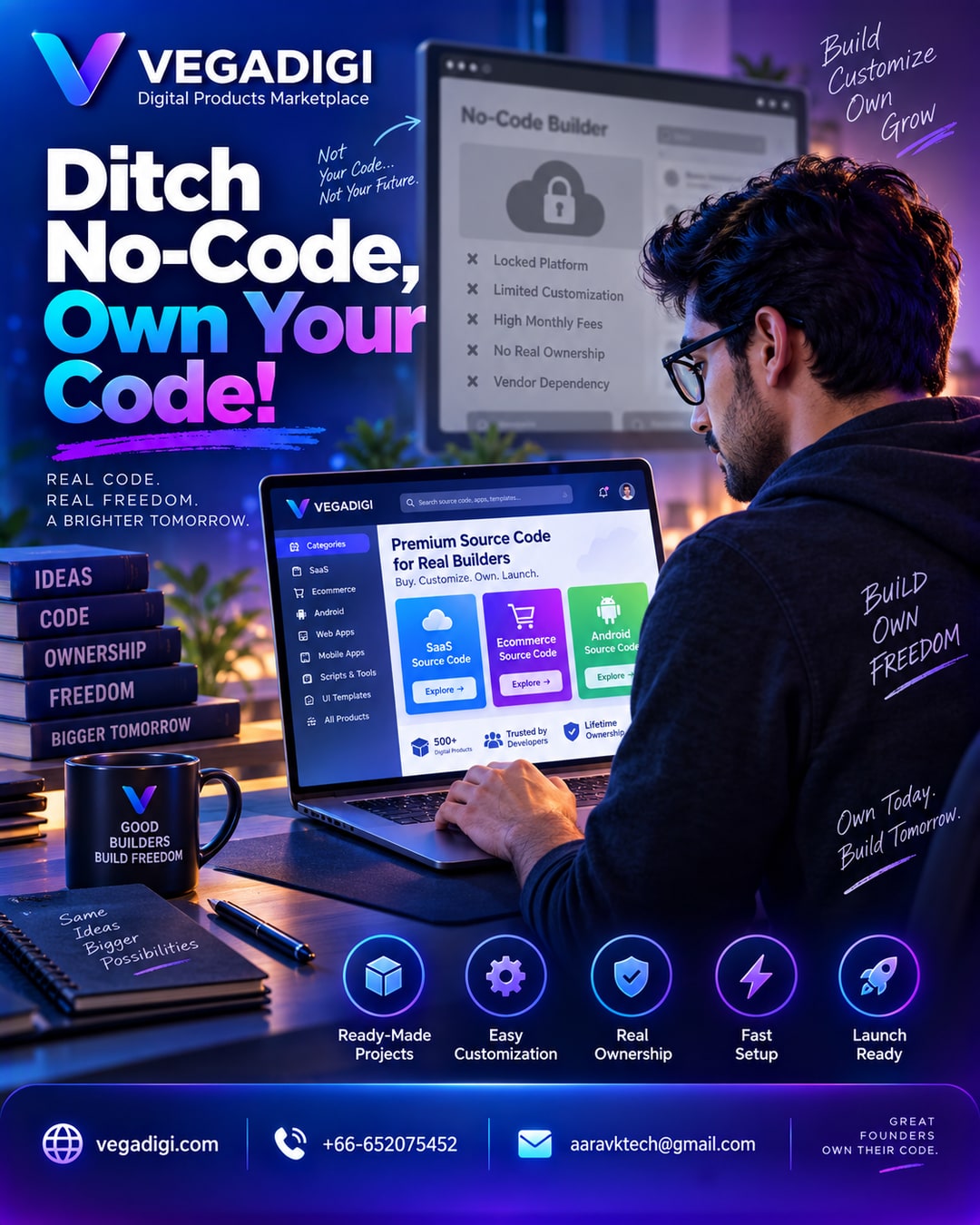
If you built your first product on a no-code platform, you're not alone — and if you're now bumping into its ceiling, you're not alone in that either. A quiet but real trend is showing up across founder communities this year: teams that started fast on drag-and-drop builders are running into limits they didn't see coming, and many are looking for a way out that doesn't mean starting over from zero.
This article breaks down what's driving the shift, what founders are actually running into, and why ready-made source code is becoming the reset point of choice for people who want ownership without losing their head start.
What's actually pushing people away from no-code platforms
The complaints follow a pattern. Pricing tiers jump once you hit real usage. Exporting your own app's data or logic is harder than expected. Adding a custom feature means waiting on the platform's roadmap instead of your own. None of this is a scandal — it's just the nature of building on someone else's rented infrastructure. It works great until your product outgrows the box it was built in.
Owning your source code changes the equation
When you start from source code instead of a locked builder, the foundation is yours. You can host it where you want, modify what you want, and grow past whatever limits a platform might impose later. That doesn't mean zero work — you still need to customize, configure, and set things up. But the ceiling disappears, because there isn't a landlord between you and your own product anymore.
Ready-made doesn't mean starting from scratch either
This is the part people often miss when they hear 'source code' and assume it means building everything themselves again. VegaDigi's whole premise is the middle ground: you're not locked into a rented builder, but you're also not staring at a blank file. You start with a working foundation across categories like SaaS scripts, e-commerce platforms, Android app source code, and business management software, then shape it into something that's actually yours.
What to check before you make the switch
If you're weighing a move away from a no-code tool, look at what data and logic you can actually take with you, whether the source code you're considering is documented well enough to customize confidently, and whether it covers the boring-but-essential backbone — things like admin panels and basic structure — so you're not rebuilding fundamentals on day one.
My take
If you're early and still validating an idea, staying on a no-code builder a little longer is fine — don't over-engineer before you have to. But if you're already feeling boxed in, paying more than you expected, or turning down feature requests because the platform can't do it, that's your signal. At that point, starting from a ready-made source code foundation on VegaDigi is worth exploring — you keep the speed, but you get the ownership back.