The Real ROI Math: What Starting From Ready Source Code Can Save vs Building From Scratch
· VegaDigi Journal
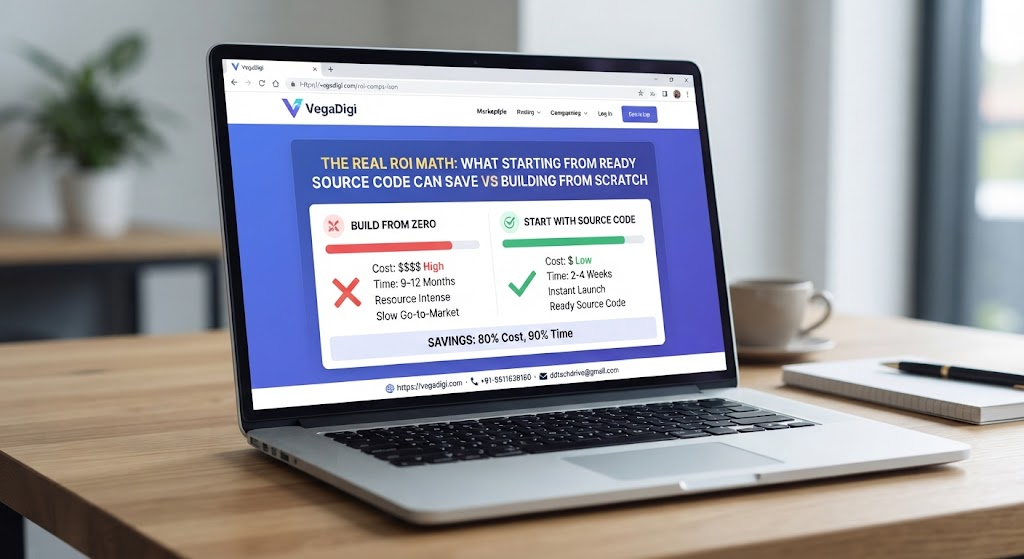
Every developer, founder, and agency owner eventually hits the same fork in the road: build this project from scratch, or start from something that already exists. Most people decide based on gut feeling. Few actually run the numbers. Here's a simple framework to think it through before your next build - and where ready-made source code fits into the equation.
What Building From Zero Actually Involves
Starting a project with a blank screen sounds simple, but it rarely is. Before a single customer sees your product, you typically need to plan the structure, design the interface, write the backend logic, build individual modules, and test everything end to end. Each of these stages takes real hours, and those hours have a real cost - whether it's your own time, a freelancer's rate, or a full development team's salary. None of this is wasted work exactly, but a lot of it is work that's been done thousands of times before, by thousands of other teams building similar things.
Where Ready Source Code Changes the Equation
This is the core idea behind a marketplace like VegaDigi: why rebuild a login system, an admin panel, or a basic ecommerce checkout flow from scratch when a reviewed, ready-made foundation already exists? Starting from source code doesn't remove development from the process - you'll still need to customize it, configure it for your use case, and set it up properly. What it does is shift your hours away from foundational rebuilding and toward the parts that actually make your product different: your branding, your specific features, your business logic.
How To Calculate Your Own ROI
Before deciding how to start your next project, it helps to ask a few honest questions. How many hours would planning and building the core structure realistically take your team? What's the hourly or day rate of the people doing that work? What's the cost of a delayed launch - missed market timing, a competitor moving faster, or a client waiting longer than promised? Once you have rough numbers for those three things, compare them against the time it would take to review, customize, and configure an existing foundation instead. For many projects, the math tips clearly toward starting with something that already works.
What This Approach Is Not
It's worth being clear-eyed here: buying ready-made source code isn't a shortcut to a finished business, and it doesn't eliminate development work. You're still responsible for customization, testing your specific setup, and launching it properly. The value isn't in doing less work overall - it's in not paying twice for the same foundational components that have already been built and reviewed elsewhere.
My Take
If you're building something genuinely novel at its core - a product where the foundational architecture itself is your competitive advantage - building from zero probably makes sense. But if your project needs the same categories of components other projects have already solved (user accounts, dashboards, ecommerce flows, admin panels), it's worth at least browsing what's already out there before you commit a team's hours to rebuilding it. Do the math first. Then decide. You can browse categories like WordPress themes, PHP scripts, SaaS scripts, and Android app source code on VegaDigi at vegadigi.com to see what a starting foundation might look like for your specific project.