The scope-creep spiral: how starting from a working VegaDigi foundation stops endless client revisions before they start
· VegaDigi Journal
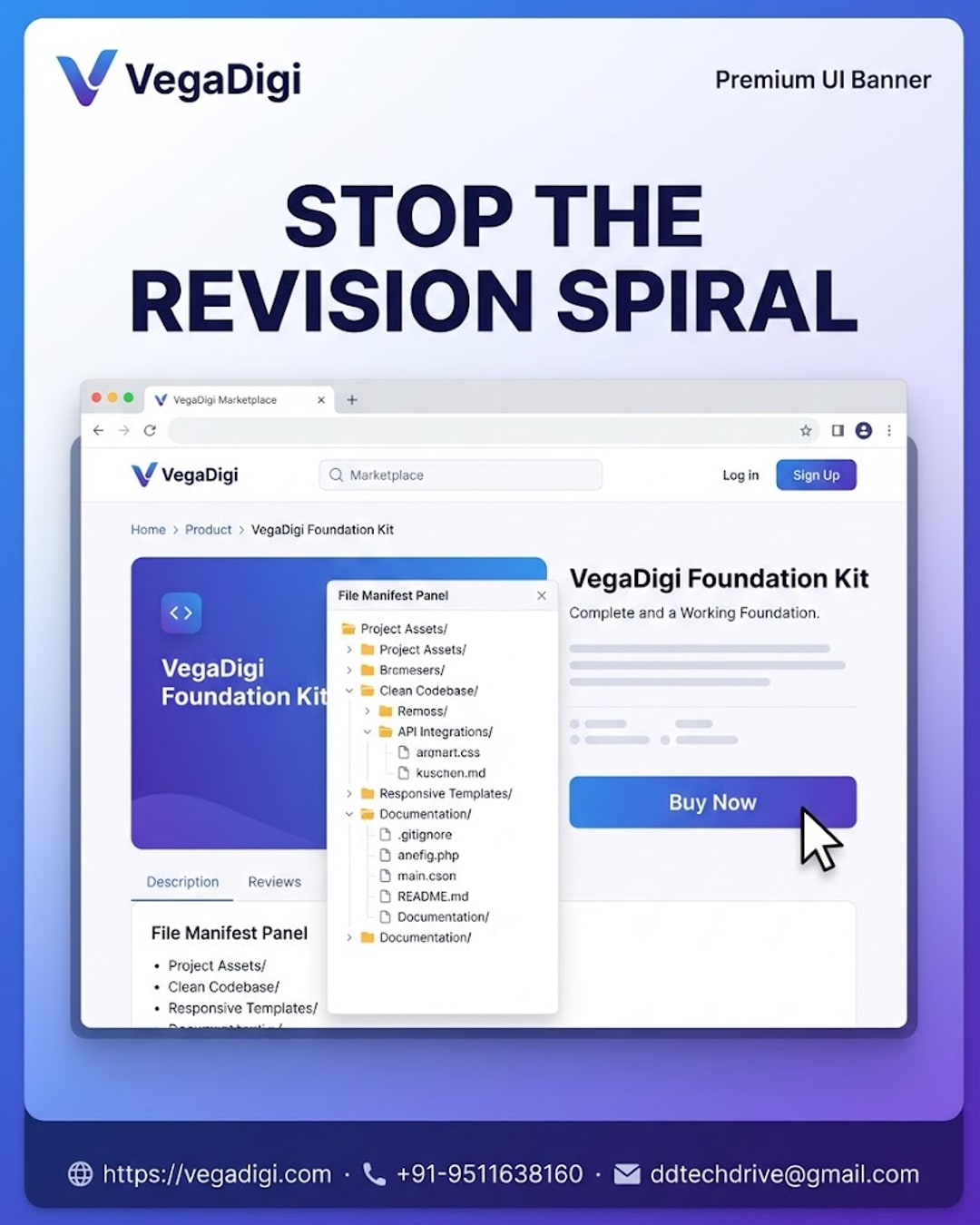
If you've ever delivered client work, you know the spiral: round one feedback reshapes the layout, round two rethinks the flow, round three questions things that were already agreed. By round five nobody remembers the original brief. This article looks at why that spiral happens and how starting from ready-made source code instead of a blank screen changes the whole dynamic.
Why vague briefs turn into endless revisions
Clients rarely know exactly what they want until they see something. When development starts from zero, the first thing they see is often a rough wireframe or an incomplete build — something abstract enough that every viewing invites reinterpretation. Each round of feedback isn't refining a decision, it's making a new one. That's how a two-week project quietly becomes a two-month one.
A working demo changes what feedback even means
When a client is reacting to a functioning product instead of a sketch, their feedback shifts. Instead of "can we try something completely different," it becomes "can we change this color, move this button, adjust this flow." That's a fundamentally smaller, more specific kind of feedback — and it's much easier to scope, quote, and deliver against.
This is the practical case for starting projects from ready-made source code rather than an empty file. On VegaDigi, developers, freelancers and agencies can browse ready-made source code, scripts and templates across categories like WordPress, PHP, SaaS, Android and e-commerce, and use an existing, working foundation as the starting point for a client project. The core idea isn't that no development work is needed — it's that the development work that remains is customization and setup on top of something proven, not invention from a blank page.
What this actually does for scope and timelines
Starting from a working foundation doesn't guarantee a fixed timeline or eliminate revisions altogether — clients will always want customization, and that's normal. What it does is narrow the kind of revisions you get. Instead of open-ended "what should this even be" conversations, you get concrete "change this, adjust that" requests that are far easier to estimate and deliver.
Where this matters most
Freelancers juggling multiple clients, agencies delivering several projects at once, and startup founders trying to get an MVP in front of users all face the same pressure: less time for open-ended exploration, more need for predictable delivery. A ready-made starting point — whether it's an app source code, a SaaS script, or a website template — gives everyone involved something concrete to react to from the very first meeting.
My take: if you're a freelancer or small agency that keeps getting burned by scope creep on custom builds, it's worth checking whether a category on VegaDigi already covers 70-80% of what a client is asking for. Start there, customize on top, and set expectations early that revisions are about refining the foundation, not reinventing it. It won't eliminate every round of feedback, but it will make each round faster and far less painful.