The scope creep trap: how endless revision rounds sink custom software projects and how a ready-made foundation stops it
· VegaDigi Journal
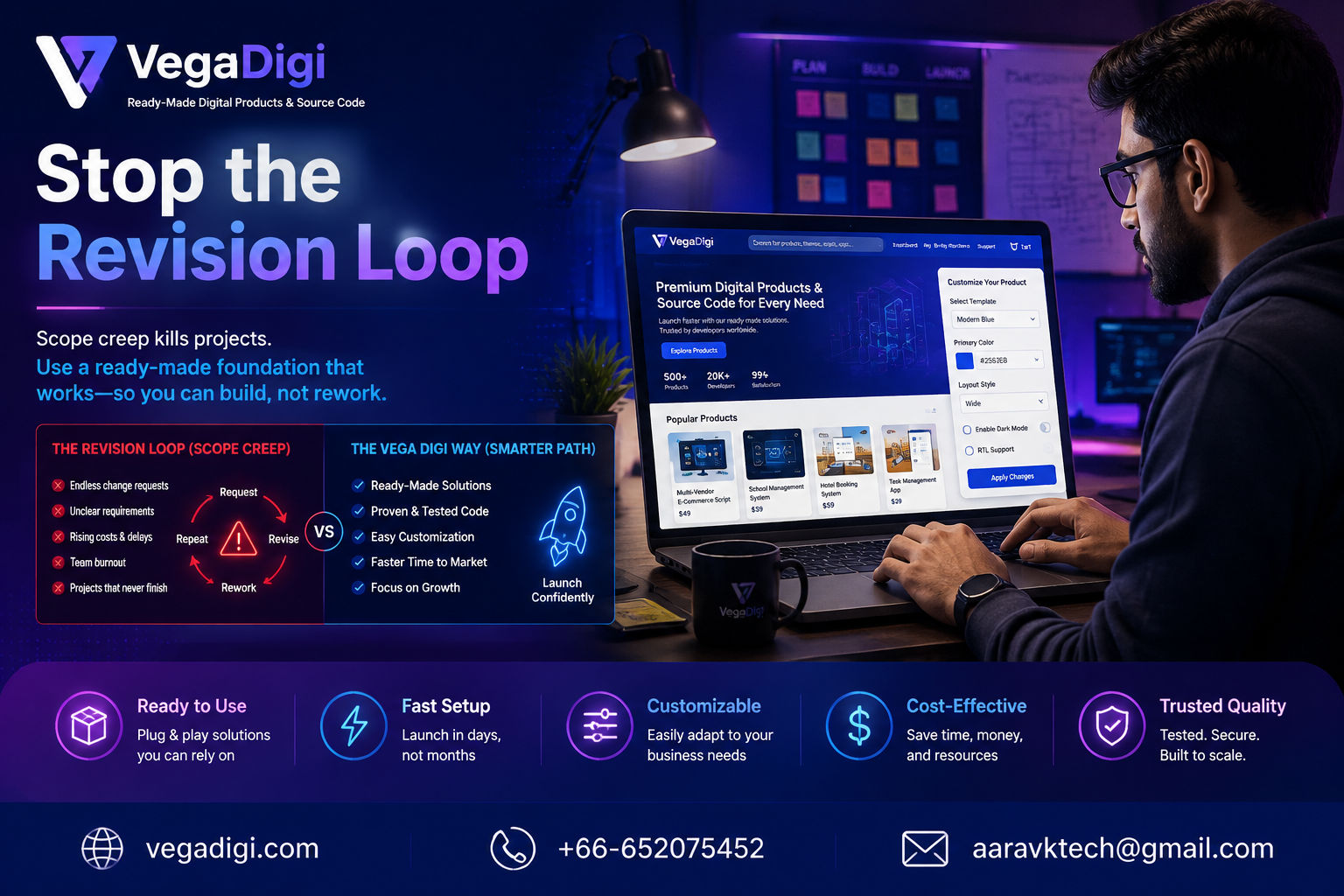
If you've ever commissioned a custom app or website, you know the feeling: the project was supposed to take six weeks, and somehow you're on revision round eight with no launch date in sight. This isn't bad luck — it's a structural problem with building from a blank page, and it's one of the biggest reasons custom software budgets spiral.
Why Scope Creep Happens So Easily
When a project starts from zero, the spec is really just a plan on paper. Once developers start building, real usage questions surface that nobody thought to ask upfront — how should the checkout flow behave, what happens on a failed booking, how should the dashboard filter results. Each answer becomes a revision request. Multiply that across every feature and the original scope quietly disappears.
The Hidden Cost Nobody Budgets For
Every revision round isn't just a design tweak — it's a re-brief, a re-estimate, and often a re-test of surrounding features. Developers lose context switching back to old code, and clients lose patience watching timelines slip. The result is a project that costs more not because the work was harder than expected, but because the starting point kept moving.
Starting From Something That Already Works
This is where a ready-made source code foundation changes the dynamic. Instead of specifying every detail from an empty canvas, you start from a working product — a real, functioning application you can see and test. Revisions become smaller and more concrete: adjusting an existing screen instead of designing one from a description. That difference alone tends to keep projects moving instead of stalling in review cycles.
What This Looks Like With VegaDigi
VegaDigi is a digital products marketplace and source code platform where developers, agencies, startups and business owners can browse ready-made source code across categories like WordPress, PHP scripts, SaaS scripts, Android app source code, e-commerce platforms and business management software. The process is straightforward: discover a product that fits your use case, buy it, customize it to your brand and requirements, set it up, and launch.
To be clear, this isn't a claim that every product requires zero development or instantly becomes a finished business — customization and setup work is still part of the process. What changes is the starting point: you're refining something functional instead of specifying something from nothing, which is often where scope creep quietly takes hold.
My Take
If you're a founder or agency that's been burned by revision cycles that never seem to end, it's worth browsing a marketplace like VegaDigi before writing a fresh spec document. Even if the exact product isn't a perfect match, starting from a working foundation and adjusting it tends to be a more contained process than building from zero. For teams on tighter timelines or budgets, that difference in control is often worth more than a fully bespoke build from scratch.