The Security Debt Stat: Why Rushed Custom Builds Ship With Hidden Vulnerabilities
· VegaDigi Journal
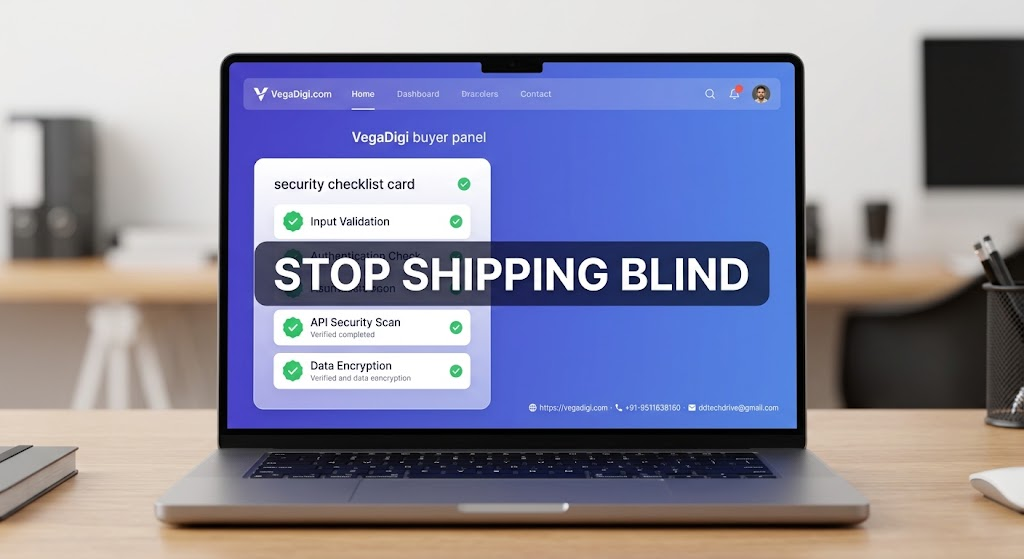
When a custom software project runs behind schedule, something has to give. More often than not, that something is security testing — the unglamorous, easy-to-postpone step that doesn't show up in a demo but matters enormously once real users and real data are involved. If you've ever built or managed a software project on a tight timeline, you already know this pattern.
The Deadline Squeeze Is Real
Every project starts with a plan that includes proper testing. Then requirements shift, a client asks for one more feature, and suddenly the launch date hasn't moved but the workload has grown. Security review is rarely the flashy part of a build, so it's the first thing quietly dropped to make the deadline work.
What Gets Left Behind
When security testing is compressed or skipped, issues don't disappear — they just surface later, usually after launch, when they're harder and more expensive to fix. Default credentials left unchanged, unvalidated inputs, exposed admin routes — these are the kinds of gaps that come from moving fast without a full review cycle, not from bad developers.
Starting From a Checked Foundation
This is where starting from ready-made source code changes the equation. On a marketplace like VegaDigi, products go through a review process before they're listed, so you're not building your first version on completely unverified code. That doesn't mean zero further work — you'll still need to customize, configure, and set up the product for your own use case — but you're not starting from a blank, untested slate either.
Customization Still Matters
It's worth being clear here: buying ready-made source code isn't a shortcut around due diligence entirely. You still need to review what you're customizing, update credentials and API keys, and test your specific configuration before going live. What changes is your starting point — you're building on top of something that's already been through a check, rather than writing every module from zero under time pressure.
A Better Habit for Founders and Agencies
Whether you're a startup founder trying to get a working version in front of real users, or an agency juggling multiple client builds, the lesson is the same: the earlier security gets baked into your process, the less it costs you later. Choosing a foundation that already accounts for this from day one is a simple way to protect that habit, even when timelines get tight.
My Take
If you're a solo founder or small team racing toward a launch date, don't treat security review as the thing you'll get to later — it rarely gets revisited once the product is live and users are on it. Starting with reviewed, ready-made source code and then doing your own configuration and testing pass is a more realistic path than promising yourself a full security audit you'll never have time for. It's not about skipping the work — it's about not starting that work from zero.