The Utility-Grid Vision 2030: What If Ready-Made Source Code Became Infrastructure, Like Electricity for Digital Businesses
· VegaDigi Journal
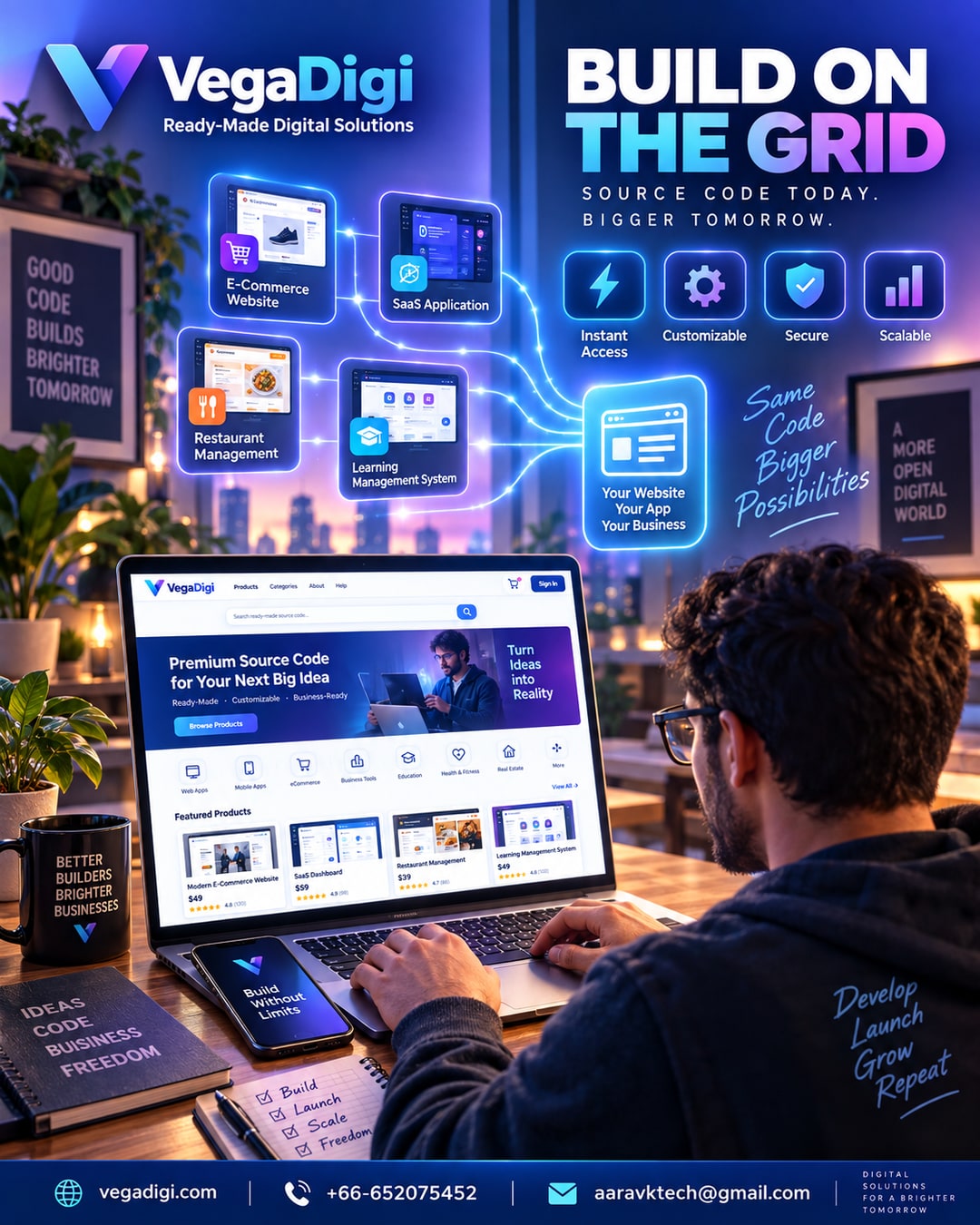
Here is a question worth sitting with for a minute. When you move into a new building, do you build your own power plant, or do you connect to the grid and wire the building the way you need it? Obviously the second one. So why does software still default to the first approach, where every new app or website starts by rebuilding the same login systems, dashboards and admin panels that already exist a hundred times over?
This article looks at a forward-looking vision for the digital products and source code industry, and what it might mean for developers, startups and agencies over the next few years.
The Grid Mindset Versus The Construction Mindset
For most of software history, building a product has meant a construction mindset: plan, design, code, test, fix, launch, starting from an empty file every time. A grid mindset flips the starting point. Instead of generating your own foundation from raw materials, you connect to a working foundation, ready source code in this case, and then do the wiring work that makes it yours. The construction still happens. It just starts several steps further along.
Why This Shift Is Becoming Realistic Now
Marketplaces for ready-made source code, scripts, themes and app templates have matured a lot. What used to be scattered, inconsistent code dumps has become organized, categorized, reviewed listings covering WordPress, PHP scripts, SaaS starters, Android app source code, ecommerce platforms and more. That organization is what makes a grid-style approach practical. You cannot treat source code as infrastructure if you cannot reliably find, evaluate and trust the piece you need.
What Does Not Change In This Vision
It is worth being direct about the limits here. Electricity does not wire your house for you, and ready-made source code does not eliminate the need for customization, setup and technical decision-making. A grid gives you power, not a finished building. In the same way, source code gives you a working foundation, not an automatically finished business. The value is in skipping the reinvention of common components, not in skipping the real work of shaping a product around your specific idea.
Who Benefits From Thinking This Way
Developers get to spend more time on the parts of a project that are actually unique to their client or product. Startup founders get a working demo to test their idea against sooner. Agencies get a consistent set of foundations they can adapt across different client requirements instead of starting cold on every engagement. Even non-technical founders benefit, because a working foundation gives developers they hire a clearer, faster starting point than a blank brief.
My Take
I think the utility comparison holds up better than most tech metaphors do, mainly because it is honest about what does and does not change. If you are a solo developer or freelancer juggling multiple projects, leaning on ready-made source code as your starting infrastructure is a genuinely sensible way to reclaim time for the customization work that actually differentiates your product. If you are further along with an established custom codebase that already fits your needs, there is less reason to switch mid-flight. But for anyone starting a new project from a blank screen, treating source code as infrastructure rather than something you build from zero is worth taking seriously.