The Vertical SaaS Trend: Why Niche-Specific Ready Source Code Is Replacing One-Size-Fits-All Software
· VegaDigi Journal
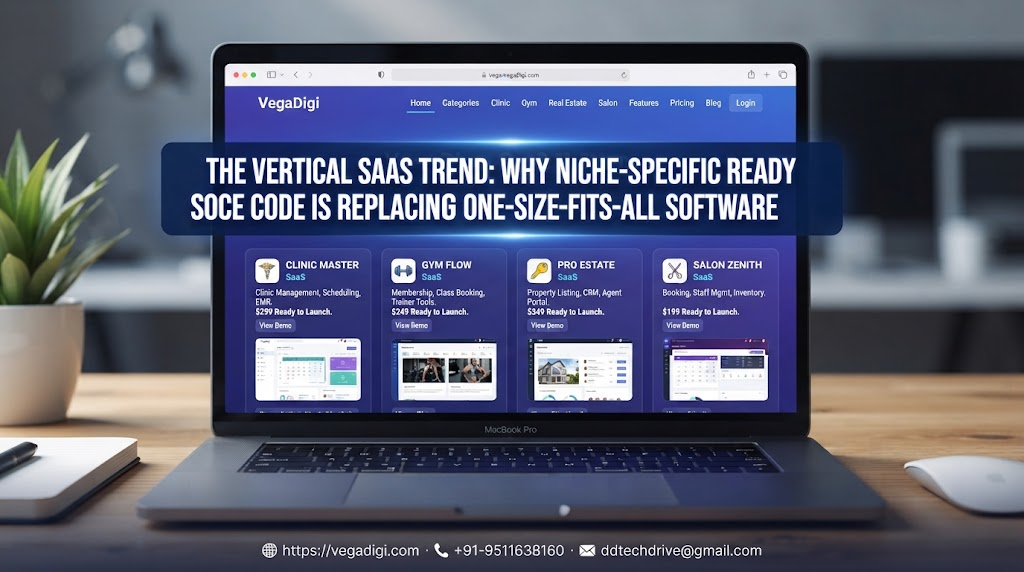
If you've been paying attention to the SaaS world lately, you've probably noticed a pattern: fewer founders are trying to build the next all-purpose platform, and more are going deep into one industry - clinics, salons, gyms, real estate, logistics - and building software that fits that world specifically. This is the vertical SaaS trend, and it's changing how people think about starting a software business.
What vertical SaaS actually means
Instead of a generic scheduling tool that tries to serve every business type, a vertical SaaS product is built around one industry's actual workflow - appointment rules for a salon, patient intake for a clinic, listing management for real estate. The narrower focus means less bloat and a product that feels like it was made for that specific user, because it was.
Why founders are drawn to this approach right now
Generic software markets are crowded and expensive to compete in. Going niche lets a founder speak directly to one type of customer's problem instead of trying to be everything to everyone. It also means the starting foundation - the codebase, the data structure, the core screens - can be closer to what that industry actually needs, instead of a blank generic template that has to be reshaped from scratch.
Where ready-made source code fits into this shift
This is exactly where a marketplace like VegaDigi becomes relevant. Rather than starting a vertical SaaS idea from an empty project, founders can look through ready-made SaaS scripts across different niches, find one that's structurally closer to their industry, and use it as the base to customize, set up and launch from. It doesn't remove the work of adapting the product to your specific business - but it does mean you're not laying the entire foundation yourself.
What to check before you commit to a niche script
Not every ready-made script will fit your vision perfectly, and that's fine - the goal isn't a perfect match, it's a head start. Look at the demo closely, understand what's core to the product versus what you'll need to customize, and be realistic about the setup work involved. A ready foundation still needs your input to become your product.
My take: if you have a clear vertical in mind - a specific industry you understand well - going niche is usually the smarter play over trying to build something generic that competes with much bigger platforms. Start by browsing what's already out there in that niche on a marketplace like VegaDigi before you assume you need to build every screen from scratch. You may find a foundation that's closer to your idea than you'd expect, and from there it becomes about customizing it into something that's genuinely yours.