The white-label boom 2026: agencies and freelancers rebrand ready-made VegaDigi source code into polished client deliverables
· VegaDigi Journal
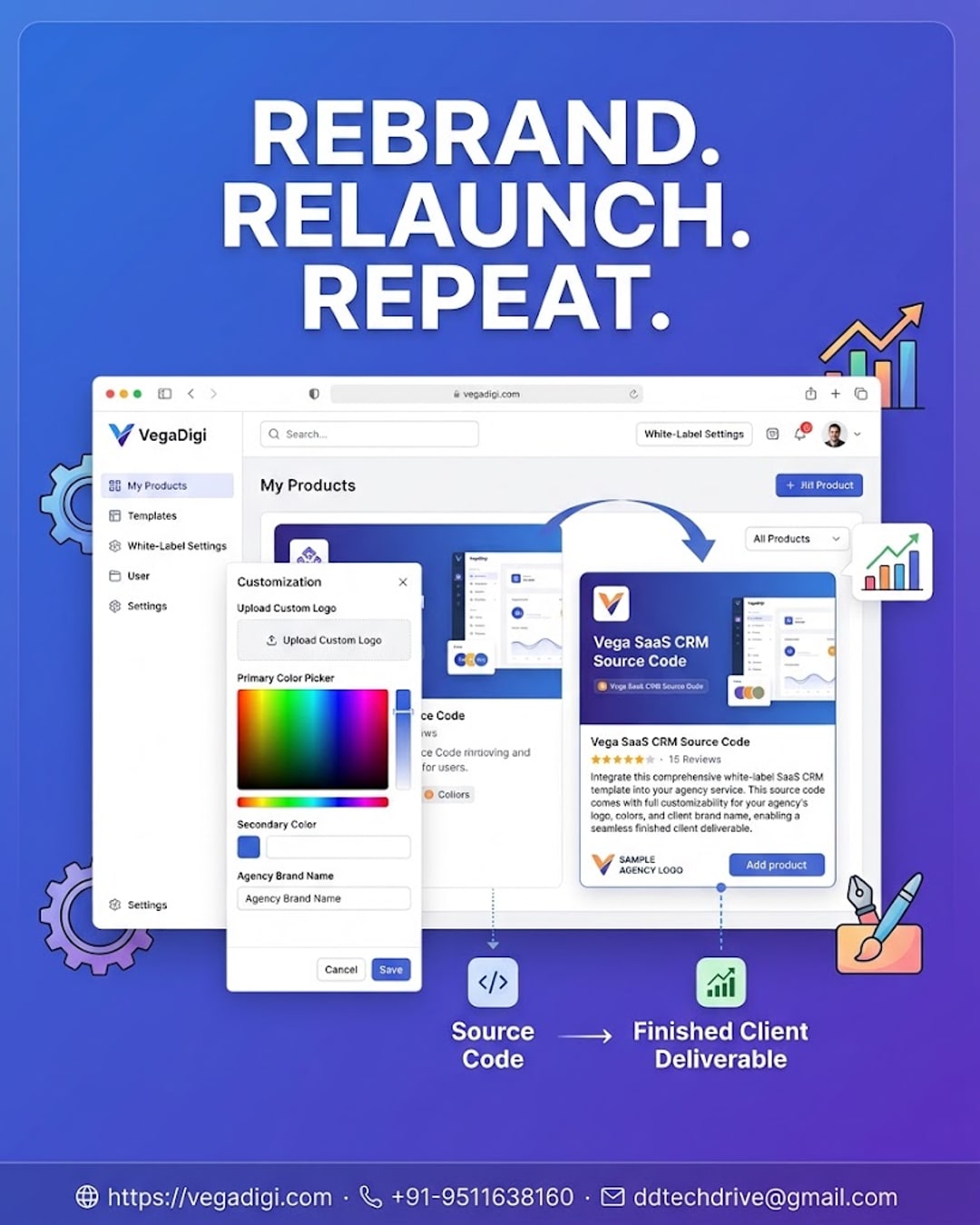
If you run an agency or freelance dev shop, you've probably noticed a shift this year: fewer clients want to hear ten weeks and a five-figure quote for something that resembles fifty other projects you've already delivered. They want it faster, and they want it branded as yours. That's exactly why white-labeling ready-made source code has become such a practical move for agencies right now.
What white-labeling actually looks like in practice
Instead of quoting a client for a fully custom build from an empty repository, agencies are starting with vetted source code — a SaaS script, an e-commerce foundation, an admin dashboard — and then applying their own branding, color palette, and client-specific customization on top. The client sees a polished, tailored product. They don't need to know it started as a foundation rather than a blank file.
Why this isn't the same as reselling a generic template
A common worry is that white-labeling means every client ends up with the same cookie-cutter product. In reality, the source code is a starting point, not the finished deliverable. Agencies still handle branding, UI adjustments, feature customization, and setup — the parts that actually make a project feel built for that specific client. The foundation just means less time spent rebuilding login flows, dashboards, or admin panels that already exist in a working, tested form.
Where this fits into agency economics
Time not spent rebuilding common components is time an agency can spend on the client-specific work that justifies its rate — custom features, integrations, design polish. For agencies juggling multiple client projects at once, starting from ready-made source code on a platform like VegaDigi can mean saying yes to more work without stretching the team thin on repetitive groundwork.
What to check before you white-label something
Before picking a script or template for a client project, it's worth reviewing what's actually included, how customizable it is, and whether it fits the client's tech stack and requirements. Not every ready-made product is right for every client, and matching the foundation to the project still takes judgment.
My take
If you're an agency owner juggling more client requests than your team can comfortably custom-build from scratch, white-labeling ready-made source code is worth testing on your next small-to-mid-sized project — it's a low-risk way to see how much time it actually frees up for the customization work that matters. If you're a solo freelancer just trying to take on more clients without burning out, starting from a solid foundation and making it your own is often the more sustainable path than promising a from-zero build every single time.