Vision 2028: developers shift from code writers to product assemblers, curating and customizing ready-made source code instead of typing every line from scratch
· VegaDigi Journal
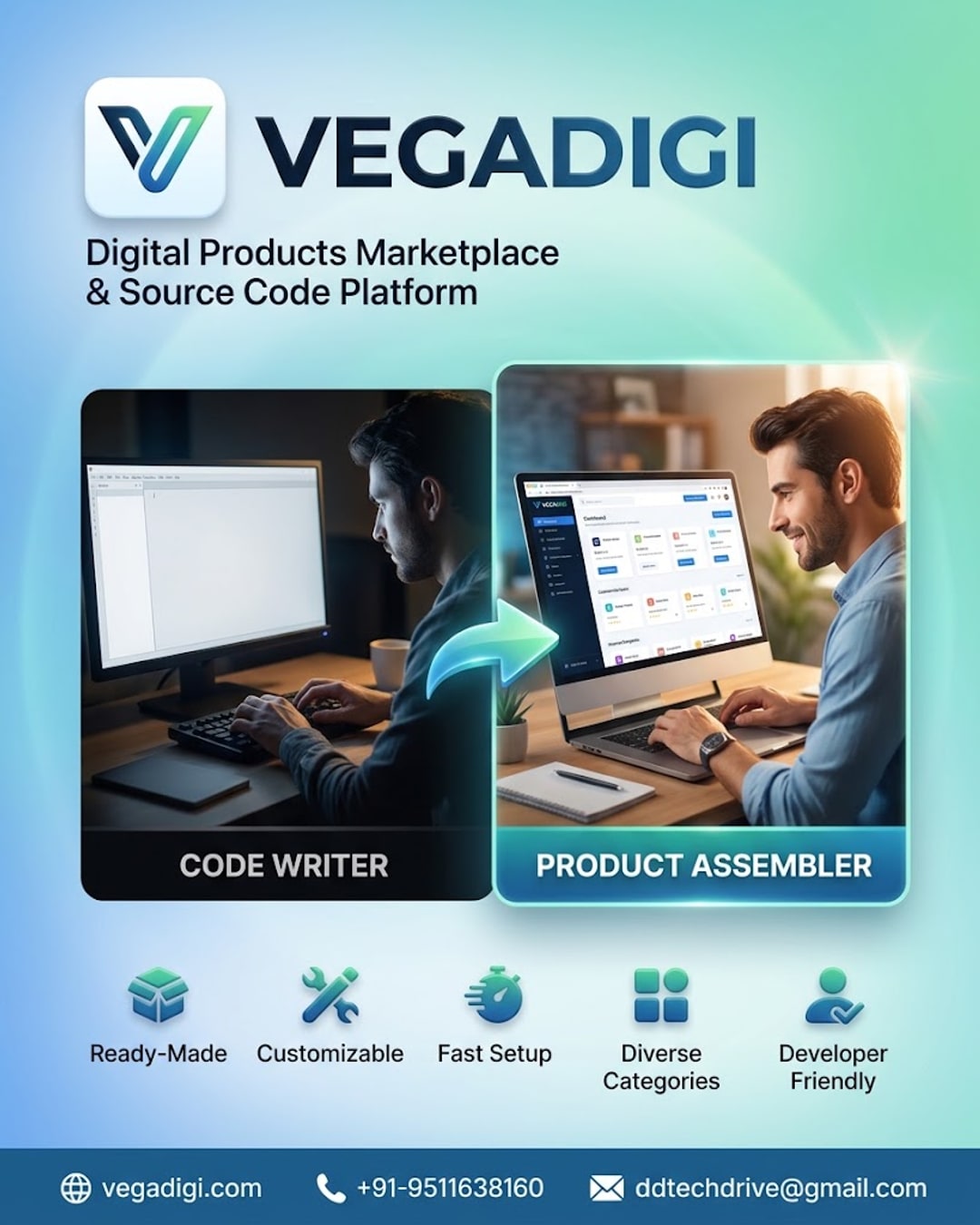
Here's a question worth sitting with: what if the core skill developers get hired for in a few years isn't writing code from a blank file, but choosing, customizing and shipping code that already exists? This article looks at why that shift is already underway, what it means for developers, founders and agencies, and how ready-made source code fits into that future.
Why Every Project Keeps Rebuilding the Same Things
Almost every web app, mobile app or SaaS product needs the same handful of core pieces - authentication, dashboards, payment flows, admin panels. Developers have been rewriting these fundamentals project after project for decades, not because they enjoy it, but because there hasn't always been a trustworthy way to start from something already built. That's slowly changing.
From Writing Code to Curating Code
Think about how design work has already shifted. Designers today rarely draw every UI element from a blank canvas - they work from component libraries and design systems, then customize. Development is following a similar path. Ready-made source code isn't a shortcut around skill; it's a foundation that lets developers apply their skill to the parts of a project that actually need original thinking.
What This Means for Hiring and Careers
If this trend continues, job listings might start valuing developers who can evaluate a codebase quickly, adapt it to new requirements and integrate it cleanly - alongside developers who write everything from zero. Neither skill disappears. But the balance of what gets rewarded may shift, especially for startups and agencies working under real time and budget pressure.
Where Ready-Made Source Code Actually Fits
This isn't about claiming every project can skip development entirely - that's not realistic, and no responsible marketplace should promise it. What it does mean is that for many common project types - a booking system, an ecommerce store, a SaaS dashboard, a mobile app shell - there's often no good reason to start from an empty file when a working, customizable foundation already exists. Platforms like VegaDigi exist for exactly that middle ground: discover a relevant source code product, buy it, customize it to your requirements, set it up, and launch.
What Developers Should Actually Do With This Shift
If you're a developer reading this, the practical move isn't to panic about being replaced by ready-made code - it's to get comfortable working with it. Learn to read and adapt existing codebases quickly. Get good at spotting which parts of a project are genuinely unique to your client's business versus which parts are the same login screen you've built ten times before.
My take: if you're a solo developer or small agency constantly quoting projects that are 70% familiar ground and 30% genuinely custom work, it's worth exploring a marketplace like VegaDigi for that familiar 70% - it frees up your time and skill for the part that actually needs it. If you're an experienced engineer building something highly specialized with no real precedent, starting from scratch still makes sense. The future probably isn't one or the other - it's knowing when each approach fits.