Wedding & event planning businesses launching an online booking and vendor management portal with a ready-made VegaDigi script
· VegaDigi Journal
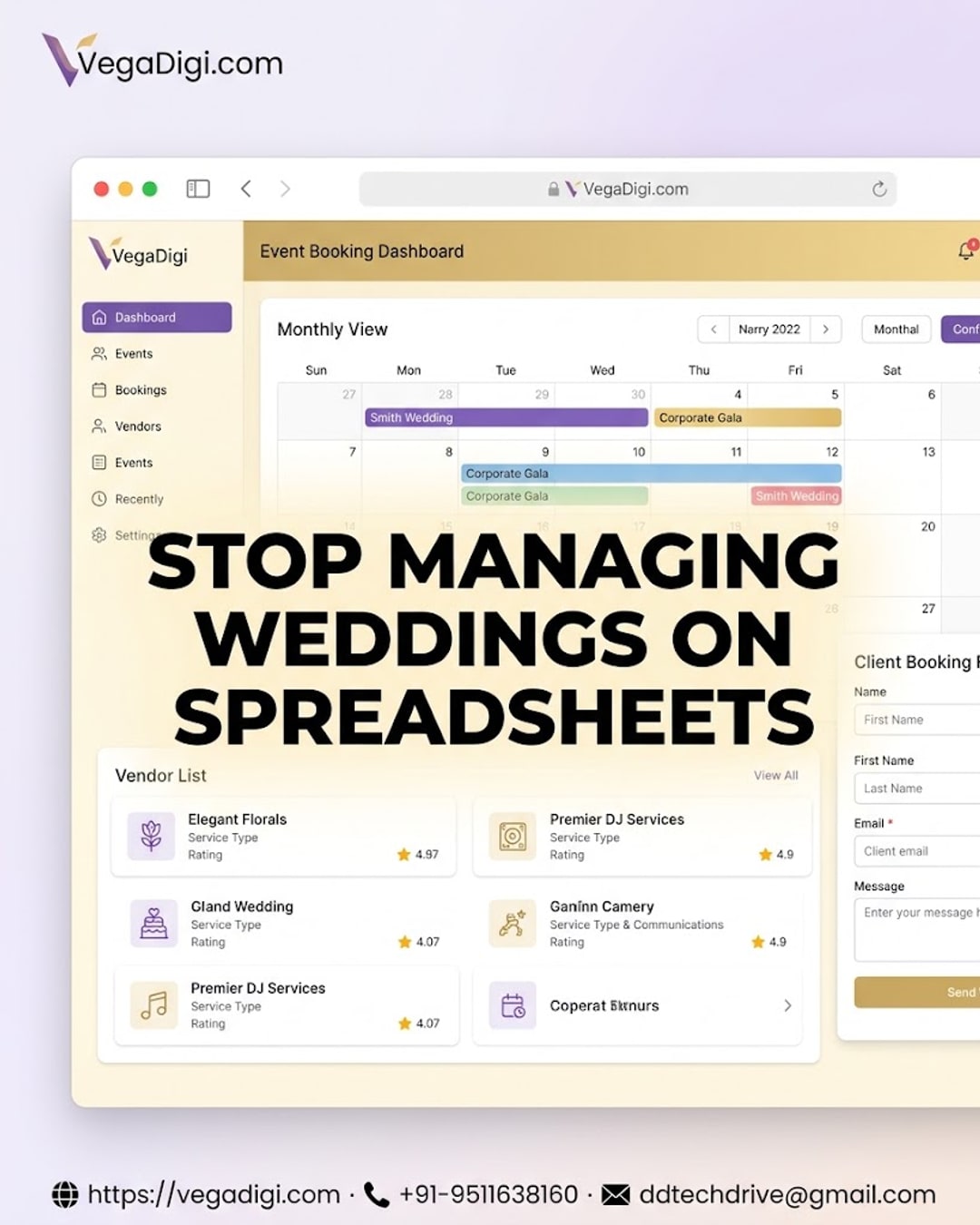
If you run a wedding or event planning business, you already know the chaos: client inquiries in your inbox, vendor confirmations over phone calls, and booking dates tracked in a spreadsheet that someone always forgets to update. It works, until it doesn't - and during peak wedding season, a missed update can mean a double booking or an unhappy client. This post looks at why more event businesses are starting with ready-made source code instead of hiring a developer from scratch, and what that actually looks like in practice.
The real cost of manual coordination
Every wedding planner has a version of this story: two vendors confirmed for the same date because updates lived in different places. It's not a lack of effort - it's a lack of a shared system. A booking and vendor management portal solves this by giving everyone, from the planner to the vendor to the client, one place to check status.
Why building one from scratch is a slow road
Development agencies quote weeks or months to build a custom booking system with a calendar, vendor profiles, and client forms. For a seasonal business, that timeline can eat into an entire wedding season before the tool is even usable. This is exactly the kind of foundational build - logins, dashboards, booking calendars - that ready-made source code already covers, so your development time goes into customization instead of starting from zero.
Starting from a ready-made foundation
This is where a platform like VegaDigi fits in. Instead of briefing a developer on requirements you're still figuring out yourself, you can browse ready-made booking and vendor management scripts, see what's actually included, and start from there. The workflow is simple: discover a suitable script, buy it, customize it for your branding and vendor categories, set it up, and launch.
What customization typically involves
Buying source code isn't a finished business on day one. You'll still need to adjust branding, configure vendor categories relevant to your services (catering, decor, photography), and set up your hosting environment. Ready-made source code shortens the distance between idea and working product - it doesn't remove the setup step entirely.
Is this the right move for your event business
If you're still coordinating bookings manually and feeling the strain every wedding season, starting from an existing foundation is worth exploring before you commit to a fully custom build. It's a practical middle ground between spreadsheets and a six-month development project.
My take: if you're a small or growing wedding/event planning business with limited technical resources, starting with a ready-made script and investing your budget into customization is the more sensible path - a from-scratch build only makes sense once your booking volume and requirements are complex enough to justify it.